Hong Kong Children Studying in Shenzhen: What to Know for 2026
In recent years, many Hong Kong families have started considering arranging for their children to study in Shenzhen, whether because of work, the cost of living, or a wish for their kids to adapt to the Greater Bay Area earlier. Shenzhen offers three main types of options: schools for the children of Hong Kong residents (following the Hong Kong curriculum and sitting the DSE), private schools offering the Hong Kong curriculum, and international schools (IGCSE/A-Level, IB, and so on). This article uses the most representative school as an example to explain the curriculum, fees, admission requirements and application timeline, then covers the practical issues to think about.
In one sentence: Fees are not cheap — at primary level they start at roughly RMB 130,000 a year, and at secondary level, with boarding, they can easily exceed RMB 160,000 a year. But if the family is already going to be living in Shenzhen, this kind of school is the only option that lets a child "study all the way through to the DSE".
Shenzhen Hong Kong Pui Kiu College Longhua Xinyi School
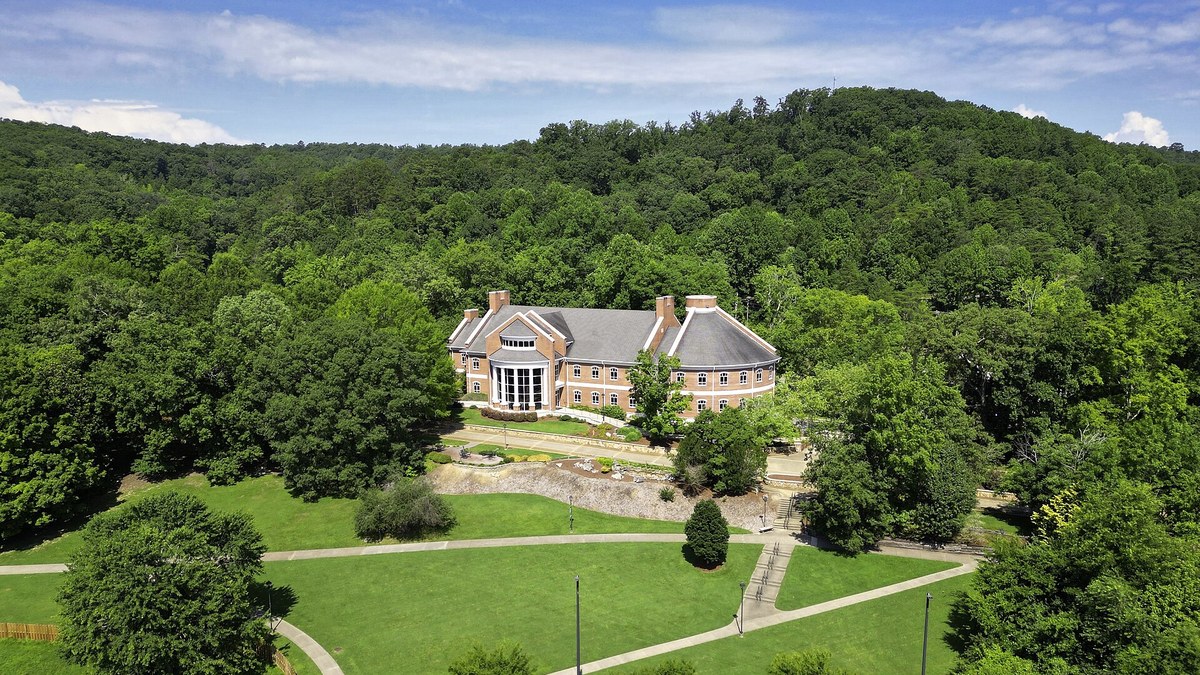
Shenzhen Hong Kong Pui Kiu College Longhua Xinyi School (Pui Kiu Longhua Xinyi for short) is located in Longhua District, on the north-west side of Shenzhen North Station, covering about 45,000 square metres, and is one of the demonstration schools for Shenzhen-Hong Kong educational integration in the Guangdong-Hong Kong-Macao Greater Bay Area. The school runs three curriculum systems: the Hong Kong curriculum (HKDSE), the mainland curriculum, and an international integrated curriculum (IGCSE + A-Level), covering primary through senior secondary. Teaching staff are mainly experienced Hong Kong teachers and overseas master's and doctoral graduates; official figures say over 95% of international curriculum teachers have studied overseas or in Hong Kong.
- Class size: small-class teaching, about 20–30 students per class, student-teacher ratio about 1:8
- Boarding: the secondary section is fully residential, with 24-hour security, evening self-study supervision and house parents
- Pathways: the Hong Kong curriculum leads to the DSE (for applying to Hong Kong's eight universities), the mainland curriculum to the gaokao, and the international curriculum to overseas institutions
- Location and transport: close to Shenzhen North Station; the high-speed rail from West Kowloon reaches Shenzhen North Station in about 18 minutes, then transfer or walk
Fees and Other Costs (2026–2027 School Year)
Below are the charges for the 2026–2027 school year (entry in September 2026), all charged per term, with two terms per year:
| Item | Amount (per term) | Notes |
|---|---|---|
| Primary school fees (Hong Kong curriculum / mainland curriculum) | ¥64,500 | Same price for both curricula |
| Junior secondary fees | ¥67,000 | Same price |
| Senior secondary fees | ¥74,500 | Same price |
| International integrated curriculum (Grades 9–12) | ¥74,500 | IGCSE/A-Level |
| Boarding fee | ¥7,200 | Optional at primary; compulsory at secondary |
| Meals | Primary ¥3,000 / Secondary ¥7,200 | Primary is lunch only; secondary includes three meals |
| Application fee | HK$550 (≈¥471) | Assessment fee, non-refundable |
| Uniform and miscellaneous costs | About ¥3,000–5,000 / year | Charged as actually incurred |
A rough calculation: at primary level, with boarding (if chosen) and meals, a term comes to about RMB 75,000; at secondary level, because boarding is compulsory, a term comes to about RMB 89,000, which is close to RMB 180,000 a year. These figures are compiled by education agencies; the final charges are subject to the school's official notice, and they are adjusted every year.
Admission Requirements and Application Timeline
Taking the Hong Kong curriculum as an example, the target intake is children of Hong Kong residents — officially defined as students holding a Hong Kong Permanent Identity Card or a Mainland Travel Permit for Hong Kong and Macao Residents (Residence Permit); Grades 1 to 10 may all apply. Admission uses a comprehensive assessment: academic results 30%, interview 40%, conduct 20%, extracurricular activities 10%. Senior grades require written tests in English and maths (plus science or liberal studies), and the interview looks at bilingual expression and logical thinking.
- Mainland curriculum: Grades 1–9, must meet Shenzhen school-place policy (Shenzhen household registration, or non-Shenzhen registration with a valid residence permit plus at least 1 year of social insurance, with the required number of years rising for senior grades)
- International integrated curriculum: Grades 9–12, open to Hong Kong, Macao and Taiwan students, foreign nationals and mainland students
- Application period: about 10 December 2025 to 11 January 2026 (closes once places are full)
- Admission assessment: held in batches from January to March 2026 (international curriculum around January, Hong Kong curriculum around January, mainland curriculum around March)
- Offer notification: 5–10 working days after assessment; payment and registration within 14 days of receiving the offer
- Start of school: 1 September 2026; mid-year transfers are accepted for both spring (March) and autumn (September) intakes
Other Schools for the Children of Hong Kong Residents in Shenzhen
Besides Pui Kiu Longhua Xinyi, Shenzhen has several other schools following the Hong Kong curriculum route, including the longer-established Shenzhen Luohu School for the Children of Hong Kong Residents (Luohu District, founded in 2001, one of the earliest such schools on the mainland), as well as a number of private and international schools offering Hong Kong or international curricula. Some public schools also run "Hong Kong student classes", but you must meet the school-place policy of the relevant district. Fees, curriculum routes and admission requirements vary widely between schools, so it is worth visiting at least two or three in person.
Things to Think Through Before Deciding
- Fees vs Hong Kong: fees at top-tier Shenzhen schools for the children of Hong Kong residents are actually similar to Hong Kong direct-subsidy or international schools, sometimes even higher — not necessarily "cheaper". Remember to factor in boarding, meals, uniforms and transport.
- Next step in education: following the DSE route keeps both Hong Kong's eight universities and overseas institutions open; but pay attention to individual subjects' school-based arrangements and how exam registration works.
- Documents and status: the Hong Kong curriculum generally requires Hong Kong resident child status; the mainland curriculum depends on residence permit and social insurance years — the two routes have completely different requirements.
- Family arrangements: secondary schooling is compulsory boarding, which means the family spends less time together; if the parents are not in Shenzhen, think carefully about who will look after the child.
- Cross-border vs moving up: commuting across the border every day is genuinely time-consuming, and most families end up renting or buying a home in Shenzhen.
Transport: Getting to the School (from the Checkpoints)
- Futian Checkpoint: from Lok Ma Chau Station take Line 4 → transfer around Shenzhen North Station, smoothest for the Longhua direction, journey about 30–40 minutes.
- Luohu Checkpoint: from Luohu Station take Line 1 → transfer at Convention & Exhibition Center Station to Line 4 → Shenzhen North Station / Longhua direction, journey about 45–55 minutes.
- Shenzhen Bay Checkpoint: from Shenzhen Bay Checkpoint Station take Line 13 → transfer at Houhai Station to Line 2/11 → then transfer to Line 4 towards Longhua, the longest journey at about 70 minutes or more.
- High-speed rail: West Kowloon → Shenzhen North Station in about 18 minutes; from Shenzhen North Station you can transfer straight to the metro or call a car — the most convenient way to visit the school.
FAQ
Can my child attend a school for the children of Hong Kong residents without a Hong Kong Permanent Identity Card?
The Hong Kong curriculum generally requires applicants to be "children of Hong Kong residents" (holding a Hong Kong Permanent Identity Card or a Mainland Travel Permit for Hong Kong and Macao Residents (Residence Permit)). If they are not, you can consider the mainland curriculum or the international integrated curriculum, but the mainland curriculum must meet Shenzhen school-place policy (residence permit plus social insurance years) — completely different requirements, so check with each school individually.
How much are the annual fees at Shenzhen schools for the children of Hong Kong residents?
Taking Pui Kiu Longhua Xinyi in the 2026–2027 school year as an example: primary ¥64,500 per term, junior secondary ¥67,000 per term, senior secondary and international curriculum ¥74,500 per term, plus boarding at ¥7,200 per term and meals. At secondary level with boarding, a year comes to close to RMB 180,000. Actual charges are subject to the school's official notice.
When should I start preparing an application?
For entry in September 2026, the application period is roughly mid-December 2025 to mid-January 2026, with admission assessments from January to March 2026, and places close once full. In other words, you need to start finding out about schools and preparing documents about a year in advance.
Sources: the official website of Shenzhen Hong Kong Pui Kiu College Longhua Xinyi School and its 2026–2027 admission information (compiled by education information platforms), Hong Kong media reports on Shenzhen schools for the children of Hong Kong residents, and Bendibao Shenzhen. Fees, curricula and admission arrangements are adjusted year by year; the school's latest official announcements prevail in all cases.

💬 Comments
Loading…