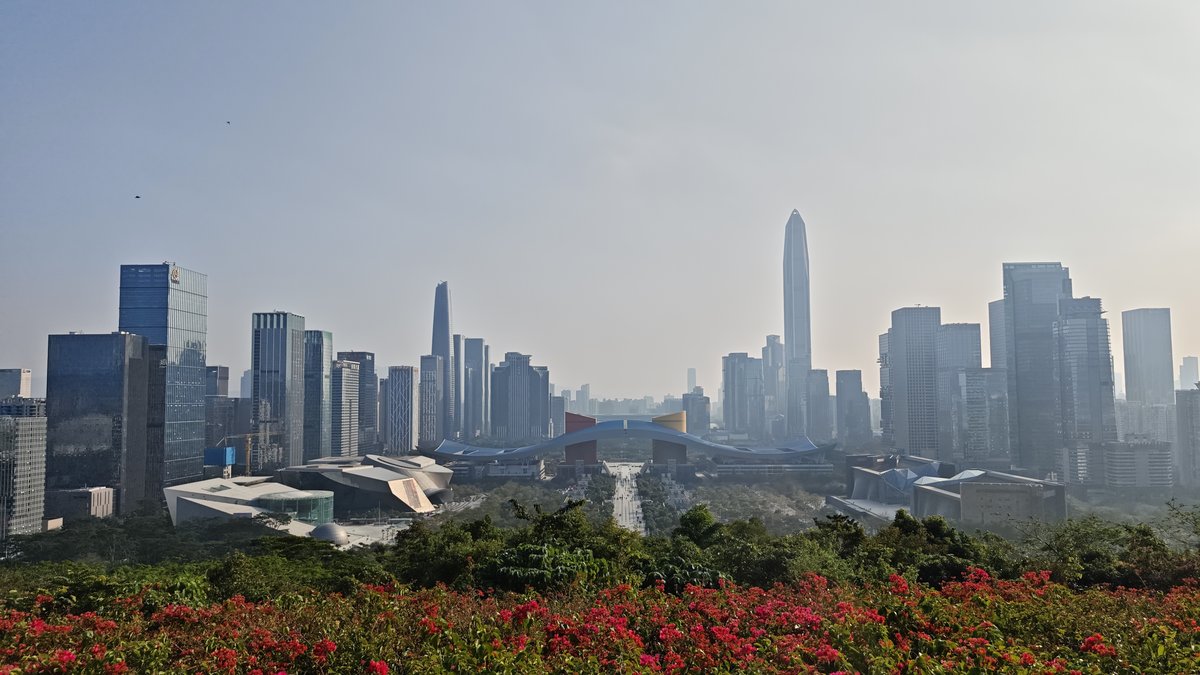
November and December are the two most comfortable months in Shenzhen, and also the two months when visitors from Hong Kong most often get their clothing wrong. In a single day you might take your jacket off while shopping, put it straight back on inside a mall, then feel cold again the moment you sit outdoors for dinner. This guide sticks strictly to weather and clothing: the official long-term average temperatures from the Shenzhen Meteorological Bureau, what the day-night temperature gap and indoor heating actually mean for your packing, three outfit scenarios (shopping by day, dinner at night, hiking in the countryside), a carry-along checklist, and nine real places to top up on clothes across Luohu, Futian and Nanshan.
To be clear about scope: this article does not repeat any list of attractions (we have separate guides to where to go in each of Shenzhen's four seasons, and to free indoor places for rainy days). It only answers what to wear, what to carry, and where to buy if you underpacked. Every temperature below is an official long-term average or climate normal rather than a forecast for any specific year, so check the Shenzhen Meteorological Bureau forecast before you travel. (Information compiled 12 October 2026.)
1. Shenzhen in November and December: what the official figures say
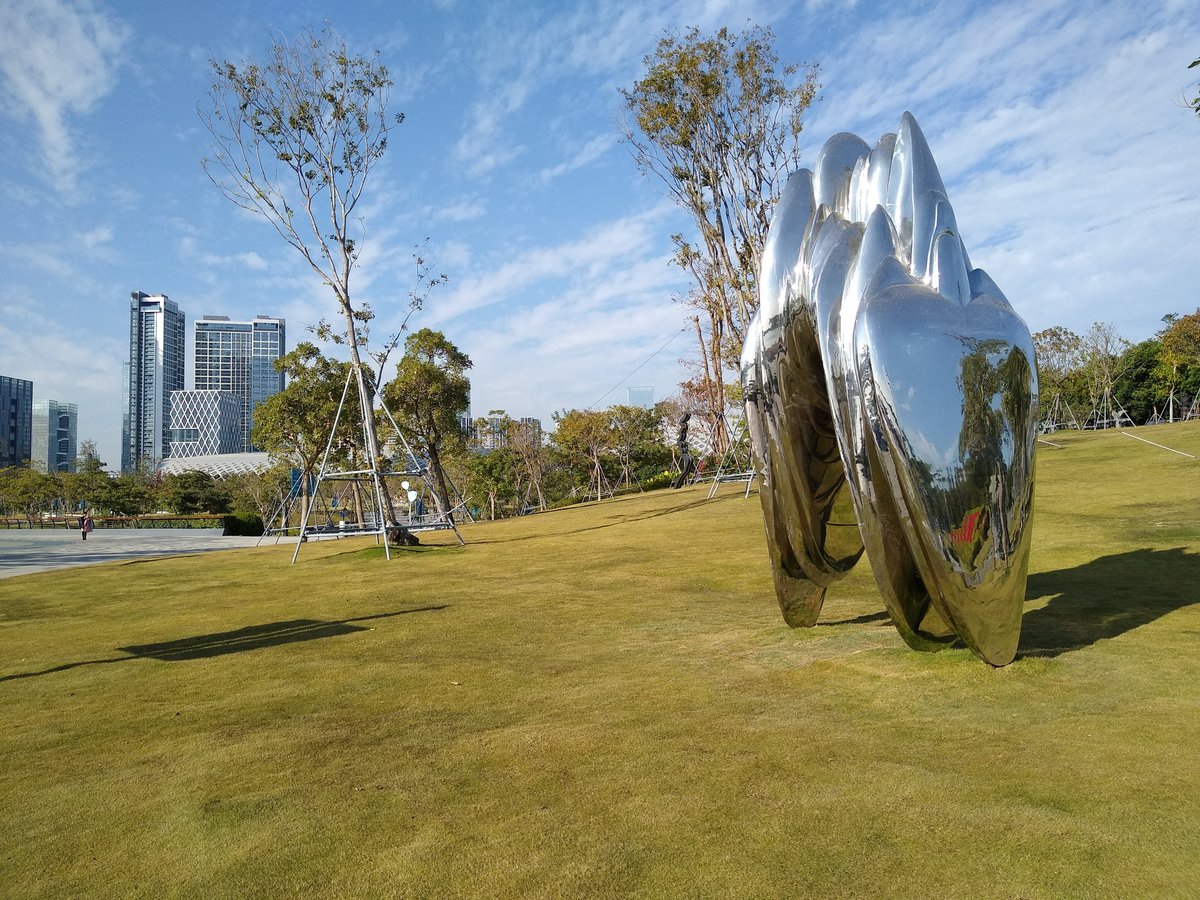
The Shenzhen Meteorological Bureau's climate overview is unusually clear on this: Shenzhen has a subtropical monsoon climate with a long summer and a short winter, an annual mean temperature of 23.3C and an all-time record low of just 0.2C. January is the coldest month, averaging 15.7C, while July peaks at 29.0C. In autumn and winter the prevailing northeast monsoon brings dry weather with little rain: 86 percent of the annual rainfall falls in the April to September flood season.
Under the climatological definition the city enters autumn on 8 November on average (as early as 28 September, as late as 27 November). Autumn averages 18.1C with 64.7 mm of rain and lasts around 74 days. Real winter only begins on 21 January on average, lasts about 13 days and averages 9.5C, and only roughly 60 percent of years since records began have had even a brief winter at all. In other words, November and December are still overwhelmingly autumn, not a Harbin-style deep freeze.
| Period | Official average temperature | Rainfall and climate notes | What it feels like |
|---|---|---|---|
| November | Monthly mean 21.8C (actual November 2024 figure, in line with the long-term normal) | Autumn averages 64.7 mm of rain; on average one tropical cyclone affects Shenzhen every eight Novembers | T-shirts or a light long-sleeve by day, a thin jacket morning and evening |
| December | Climate normal 17.4C (December 2025 reached 19.1C, 1.7C above normal and the second-highest on record) | One of the driest months of the year, clear and dry | Around 20C by day, dropping into the teens at night, so bring a proper outer layer |
| January (for comparison) | Monthly mean 15.7C, the coldest month | About one third of the year’s cold surges fall in winter | The only month that genuinely calls for a down jacket |
November: short sleeves are fine by day, add a layer at night
With a monthly mean of 21.8C, most November days hit 24C to 27C, so short sleeves while shopping in Dongmen or wandering a mall are perfectly normal. After dark it drops into the teens. Watch for late typhoons: on average one tropical cyclone affects Shenzhen every eight Novembers, and in November 2024 the city recorded an average of 110.4 mm of rain, 4.13 times the five-year average for that month. November 2024 was also distinctly front-loaded, warm early and cold late, which is exactly the pattern to pack for.
December: the one month that can turn genuinely cold
December 2023 is the textbook case. The first half was persistently warm, topping out at 30.8C and smashing the December record; then a strong cold surge hit in the second half and temperatures fell 12.8C in 48 hours, with five consecutive days averaging below 12C, the longest such run since 1985. Winter arrived on 21 December, a full month earlier than normal. Yet the 2025 climate bulletin shows only eight cold days in the whole of 2025, against a long-term average of 16.2. December is therefore best understood as unreliable rather than mild: bring one outer layer that can genuinely handle a sudden 10C drop.
Rain: the driest stretch of the year, but not rain-free
Because 86 percent of annual rainfall falls from April to September and autumn droughts are an almost annual event, November and December rarely deliver days of steady rain. They are instead the clearest, driest weeks of the year. November can still bring a late typhoon, however, as noted above. The packing rule is simple: one small folding umbrella permanently in your bag, and no need for a raincoat or waterproof boots.
2. The day-night gap and indoor heating: the two most underestimated factors
No district heating, but malls, metro trains and restaurants all run the heating
In the 1950s China drew its district-heating boundary along the Qinling-Huaihe line, and Shenzhen sits well south of it. Residences, most hotel rooms and older buildings therefore have no central radiators. Malls, metro carriages, restaurants and offices, on the other hand, all run their air conditioning in heating mode, so indoor spaces are often above 22C while the street is in the low teens. That 8C to 10C swing is the single biggest cause of bad packing decisions here: dress too warmly and you will sweat indoors, then freeze the moment you step back out.
There is a second factor. Residential walls in the south are typically about 24 cm thick (two brick courses), against 37 cm in the north (three courses). Without heating, indoor space in Shenzhen can actually feel colder than the street, so expect to switch on the room heating as soon as you get back to your hotel. Layering matters more here than in a northern city, not to survive extreme cold but to be able to add and remove a layer at any moment.
Three-layer dressing: base, mid, outer
- Base layer (moisture management): a thin quick-dry long-sleeve or a light thermal top. Heavy heat-tech styles are overkill here and will leave you sweating indoors, which makes you colder once you go back outside.
- Mid layer (warmth): a thin knit, fleece or a light down vest that you can strip off and stuff in a bag while indoors.
- Outer layer (wind and rain): a windproof shell or a mid-length coat. Wind, not cold, is the real enemy in a Shenzhen winter. The Shenzhen Meteorological Observatory notes that above 0C, every two Beaufort levels of added wind lowers the perceived temperature by 3C to 5C. A light windproof jacket beats a heavy coat that lets the wind through.
3. Three outfit scenarios: shopping by day, dinner at night, hiking out of town
Scenario 1: daytime shopping (Dongmen, Huaqiangbei, malls)
Most of a shopping day is spent indoors and in crowds, where heating plus body heat makes it feel warm. Wear a thin long-sleeve or short sleeves with a light knit on top, jeans or joggers, and shoes that come off easily since malls and the metro both run security screening. Choose an outer layer that is light enough to pack into a day bag. In November you can comfortably wear short sleeves all day with just a spare jacket.
Scenario 2: dinner, late-night food and night views
Night-time temperatures run several degrees below daytime, and outdoor tables, open-air food stalls or waterfront restaurants add wind. Add a mid-length coat or light down jacket plus a thin scarf to your daytime outfit. Keeping your neck covered is the single most effective thing you can do and is worth roughly half a garment. If you are heading to a late-night food street with outdoor seating, take that extra layer.
Scenario 3: hiking and coastal cycling (Wutong Mountain, Shenzhen Bay)
Open countryside, hilltops and the coast are windy, and the same wind-chill rule means the perceived temperature can drop another 3C to 5C. Wear a quick-dry tee with a windproof shell (wind protection matters more than insulation), trail shoes with real grip, and a cap or thin beanie. Bougainvillea is still blooming in Shenzhen in November, so never pack a down jacket for a hike, but a windproof outer layer and an insulation layer for after sunset are essential. Cyclists should treat wind protection as non-negotiable, since speed amplifies wind chill.
| Scenario | Base | Mid | Outer | Shoes and accessories |
|---|---|---|---|---|
| Daytime shopping | Thin long-sleeve tee | Light knit (removable) | Light windproof jacket | Easy-on trainers; day bag |
| Dinner at night | Thin long-sleeve tee | Light knit or fleece | Mid-length coat or light down | Thin scarf; packable jacket bag |
| Countryside hiking | Quick-dry tee | Fleece or light windbreaker | Windproof shell (essential) | Trail shoes; cap, gloves, thermos |
4. What to carry: a checklist
Always bring:
- A small folding umbrella. November still carries late-typhoon risk, and sunny December days have strong UV.
- A thin scarf. The most effective and lightest cold-weather accessory for evenings and the countryside.
- A packable jacket or shell you can take off inside malls and metro carriages.
- A thermos or water bottle. Official climate notes describe the autumn and winter months as dry and rain-poor, and hydration matters on hikes.
- Lip balm, hand cream and moisturiser, the most commonly forgotten items in dry weather.
- A folding tote, a power bank and a mask if cold wind irritates you.
Situational additions:
- Thin gloves and a beanie for countryside trips or when a cold surge arrives.
- Hand warmers for the few cold snaps in December, invaluable while queuing.
- Sunglasses, since clear November days are common and reflections are strong.
- Basic medicine such as cold remedies and throat lozenges; big day-night swings are hard on the throat.
5. Underpacked? Nine real places to top up in Luohu, Futian and Nanshan
If you genuinely misjudged the weather, Shenzhen makes it easy to fix: most of these are a couple of metro stops from a border crossing. All nine are real, well-used locations, each with an address, metro line and exit, and rough prices. For a full brand-by-brand price comparison with Hong Kong, see our separate guide to buying autumn and winter clothing in Shenzhen.
Luohu (Dongmen): Dongmen Baima clothing wholesale market
Address: Dongmen area, Renmin North Road, Luohu District. Shenzhen’s oldest wholesale garment cluster, with huge choice in winter coats, knitwear, sweatshirts and thermal underwear. Haggling is normal and some stalls sell retail.
Metro: Metro Line 1 or Line 3 to Laojie station, Exit A, then about five minutes on foot.
Rough prices: Thermal sets from around 69 RMB, knitwear from around 99 RMB, coats from around 300 RMB, at stall prices. Weekdays are quieter and easier to browse.
Luohu (Sungang): Decathlon Mixfood store
Address: Inside the Mixfood mall in Sungang, Luohu, roughly 1,500 sq m. Opened 25 April 2026 as Luohu’s first full-category Decathlon, a few metro stops from the border.
Metro: Metro Line 7 to Sungang station, Exit A.
Rough prices: Windproof shells from around 199 RMB, quick-dry tees from around 39 RMB, plus fleeces, gloves and scarves from Decathlon’s own low-cost brands, at store prices.
Luohu: The MixC
Address: 1881 Bao'an South Road, Luohu District (Phases 1 and 2). Luohu’s densest branded mall, mixing international and domestic labels, with strong end-of-season discounts.
Metro: Metro Line 1 or Line 2 to Grand Theatre station, with a dedicated mall passageway; Exit F also works.
Rough prices: Knitwear and jackets from around 199 RMB, mid-length coats roughly 300 to 800 RMB, at counter prices.
Futian (Shopping Park): COCO Park
Address: Fuhua 3rd Road, Futian District. A mid-to-upper-end mall with Uniqlo, GU and domestic designers, good seasonal discounts and plenty of restaurants when you are done.
Metro: Metro Line 1 or Line 3 to Shopping Park station, connected to the mall.
Rough prices: Knitwear from around 99 RMB and light down jackets from around 399 RMB. Opening hours are roughly 10:00 to 22:00, subject to the mall’s announcements.
Futian (Huaqiangbei): Huaqiangbei commercial area
Address: Along Huaqiang North Road, Futian District. Beyond electronics, the surrounding streets have plenty of budget clothing and thermal underwear stalls, so you can pick up phone accessories at the same time.
Metro: Metro Line 2 or Line 7 to Huaqiangbei station, around Exit D1.
Rough prices: Thermal sets from around 69 RMB; budget sweatshirts and jackets 99 to 299 RMB. Quality varies, so check the fabric yourself.
Futian (Huaqiangbei): Bosideng at Maoye Department Store
Address: Level 5, Maoye Department Store, 2009 Huaqiang North Road, Futian District. The domestic down-jacket leader’s counter, with men’s, women’s and children’s ranges, useful if a cold snap is due.
Metro: Metro Line 2 or Line 7 to Huaqiangbei station, then walk to Maoye Department Store.
Rough prices: Long down jackets roughly 500 to 1,500 RMB, about 10 to 20 percent cheaper than Hong Kong, at counter prices.
Nanshan (Houhai): Coastal City and Shenzhen Bay MixC
Address: Wenxin 5th Road (Coastal City) and Houhai (Shenzhen Bay MixC), Nanshan District. Nanshan’s core shopping belt, strongest for international brands and domestic designers, with the Pink Street photo spot at Shenzhen Bay MixC.
Metro: Metro Line 2 or Line 11 to Houhai station, with metro-linked passages to both malls.
Rough prices: Light down jackets from around 399 RMB and mid-layer knitwear from around 199 RMB. Opening hours roughly 10:00 to 22:00, subject to the malls.
Nanshan (Shahe): Decathlon Shahe store
Address: 255 Shahe East Road, Nanshan District. One of Shenzhen’s long-established large stores, well stocked with trail shoes, shells, backpacks and camping gear in one trip.
Metro: Reached via Baishizhou station with a connection, or from Shenzhen Bay Port on Line 13 with a change.
Rough prices: Entry-level trail shoes from around 199 RMB, windproof shells from around 199 RMB, 20-litre backpacks from around 79 RMB, at store prices.
Futian (Shangmeilin): Decathlon Meilin at Zhuoyuehui
Address: Zhuoyuehui, Shangmeilin, Futian District. Opened 30 September 2026 as Decathlon’s 44th store in Guangdong, with the newest stock, and convenient for both Futian and Nanshan.
Metro: Metro Line 4 or Line 9 to Shangmeilin station, directly connected to the mall.
Rough prices: Windproof shells from around 199 RMB, quick-dry tops from around 39 RMB, fleeces from around 99 RMB, at store prices.
Frequently asked questions
Is Shenzhen cold in November? Do I need a down jacket?
No. November averages 21.8C, the actual figure for November 2024 and in line with the long-term normal, and most days reach 24C to 27C, so short sleeves are fine. Leave the down jacket at home and bring a light jacket or windproof shell for mornings and evenings.
Does it snow in December, and should I bring a heavy down jacket?
Shenzhen’s all-time record low is just 0.2C and only about 60 percent of years have even a brief winter, so snow is effectively off the table. December averages 17.4C. A heavy down jacket is not essential, but a windproof outer layer with some real warmth is, because December 2023 saw a 12.8C drop in 48 hours in the second half of the month.
If malls and the metro have heating, can I dress lightly?
Yes, but you need to be able to adjust. Shenzhen has no district heating, so malls, metro trains and restaurants rely on air-conditioning in heating mode and often sit above 22C indoors while the street is in the low teens, an 8C to 10C swing. Layer up so the mid layer comes off indoors and the windproof shell goes back on outside.
How much does it rain in November and December?
Very little. 86 percent of annual rainfall falls between April and September, making this the driest stretch of the year with few days of steady rain. November still averages one tropical cyclone every eight years, so brief heavy showers are possible. A small folding umbrella is enough.
Do I need extra clothing for dinner at night?
Yes. Night-time temperatures run several degrees lower, and outdoor tables or waterfront restaurants add wind. According to the Shenzhen Meteorological Observatory, above 0C every two Beaufort levels of added wind lowers perceived temperature by 3C to 5C. A thin scarf and a mid-length coat are the most practical additions.
Sources
- Shenzhen Meteorological Bureau, Climate Overview and Characteristics of the Four Seasons (updated 3 September 2026): annual mean 23.3C, record low 0.2C, January and July averages, seasonal definitions, and autumn and winter averages for temperature and rainfall.
- Shenzhen National Climate Observatory, November 2024 Shenzhen Climate Impact Assessment (published 3 December 2024): November mean of 21.8C, autumn onset date, and average city rainfall of 110.4 mm.
- Shenzhen Meteorological Bureau, 2025 Shenzhen Climate Bulletin (published 2 February 2026): December climate normal of 17.4C, December 2025 actual of 19.1C, eight cold days, and comfort-day counts for the winter half-year.
- Shenzhen Meteorological Bureau, 2023 Shenzhen Climate Bulletin and the 2024 Spring Festival travel climate outlook: December 2023 high of 30.8C in the first half, a 12.8C fall in 48 hours in the second half, and winter onset on 21 December.
- Shenzhen Meteorological Bureau, 2022 Shenzhen Climate Bulletin: the 8.0C gap between November and December monthly means, the second-largest on record.
- Shenzhen Meteorological Observatory forecast, reported by Shenzhen News on 7 January 2026: above 0C, every two Beaufort levels of added wind lowers perceived temperature by 3C to 5C.
- Xinhua, As the heating season begins, are southern cities still shivering? (5 November 2019), and Ministry of Housing and Urban-Rural Development material on the Qinling-Huaihe district-heating boundary: Shenzhen sits outside the district-heating zone, and southern walls are built thinner than northern ones.
All temperatures, rainfall figures and dates above come from official meteorological sources and represent long-term averages or climate normals rather than any single year’s weather. Check the latest Shenzhen Meteorological Bureau forecast and announcements before you travel, and confirm shop addresses, prices and opening hours against the malls’ and brands’ own official notices.
Related articles
- Shenzhen Four Seasons Guide: 12 Places to Go, What to Wear, and 4 Peak Seasons to Avoid
- Shenzhen Free Indoor Things to Do on Rainy Days 2026: 8 Museums, Art Galleries and Exhibition Halls
- Hong Kong vs Shenzhen Price Comparison: Buying Autumn/Winter Clothing in Shenzhen 2026

💬 Comments
Loading…