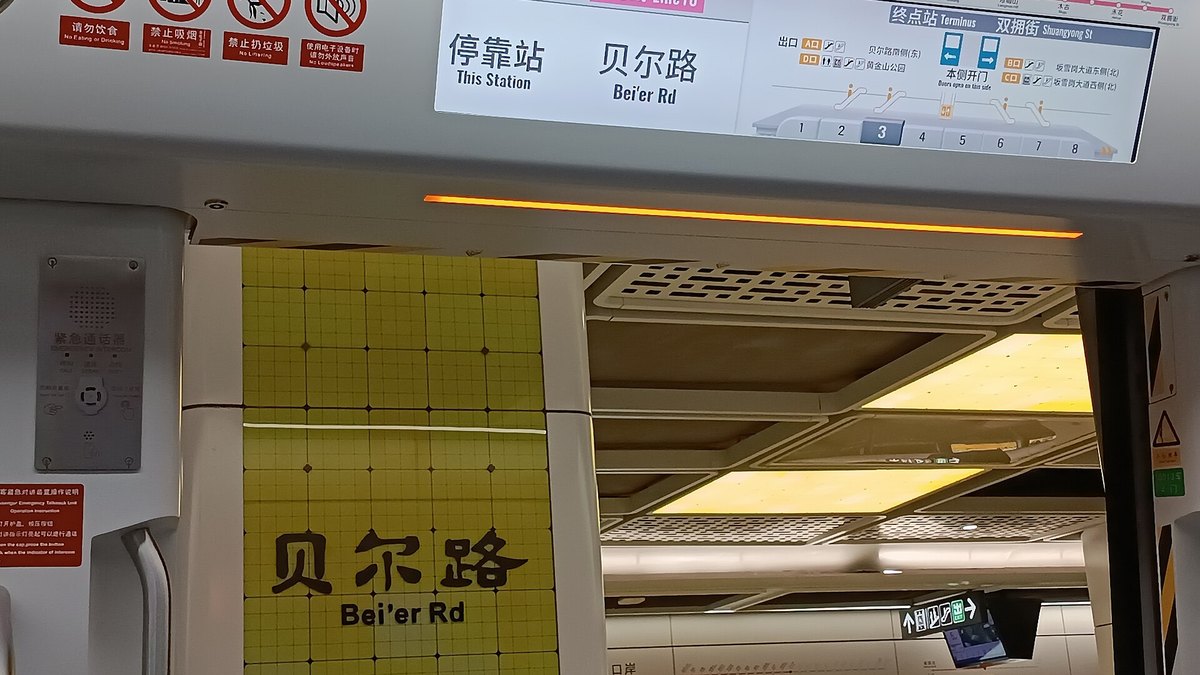
Hongkongers heading north take the Shenzhen Metro almost every day, but starting from July 20, 2026, the Shenzhen Metro is fully implementing "person and bag screening" — all carry-on luggage must go through the X-ray machine, and passengers must also stop before entering the gates to be scanned once by staff with a handheld device. The first day of the new system fell on a Monday, hitting both the morning commute peak and heavy rain; hubs like Futian Station and Chegongmiao Station once saw queues snaking back and forth. This article combines official announcements and real-world feedback to explain clearly which 14 stations are the most crowded, which items you cannot bring, and how to save yourself a dozen or so minutes.
1. What is the new system? From July 20, "every bag checked, every person screened"
The Shenzhen Metro announced on July 19 that starting July 20 it would achieve "full security screening coverage at station entrances," with two specific points: ① All carry-on luggage and items must pass through a security machine for screening; ② Every passenger entering a station must cooperate with security staff using handheld security equipment to undergo a personal safety check.
In other words, whereas previously some stations had "small bags exempt" or only random checks, now it is uniformly every bag checked and every person screened — even passengers with empty hands and no bag must stop to be scanned once by staff. The metro explained that the measure is being carried out in accordance with a document issued by the Shenzhen Municipal Transport Bureau, and is a temporary arrangement to safeguard the safety of summer travelers and commuter flows, not a permanent rule change.
If you are on a quick day trip, you will usually only carry one backpack, so the impact is not too great; but if you are dragging a suitcase in from Luohu Port and then transferring across several lines to Nanshan, you should allow more time. According to the official wording, the measure mainly affects high-traffic stations during the morning and evening peaks.
2. The 14 worst queue-hit stations during peak hours
Officials named the following 14 high-traffic stations, where entry times during peak hours will increase noticeably compared with normal days:
- Pingzhou Station, Gushu Station (Bao'an Xixiang area)
- Hi-Tech Park Station, Shenzhen University Station, Houhai Station, Zhongshan Park Station (Nanshan District)
- Minzhi Station, Wuhe Station (Longhua/Longgang)
- Chegongmiao Station (core Futian interchange hub)
- Danzhutou Station (Longgang)
- Fanshen Station, Liutang Station, Shangchuan Station (Bao'an)
- Liuxiandong Station (Nanshan)
These stations cluster along three corridors: ① the Line 1 Bao'an–Nanshan–Luohu corridor (Pingzhou, Gushu, Hi-Tech Park, Shenzhen University, Fanshen, Liutang, Shangchuan, Zhongshan Park); ② the Line 4/5 Longhua–Longgang corridor (Minzhi, Wuhe, Danzhutou); ③ the Line 11/13 Nanshan–Bao'an corridor (Houhai, Shenzhen University). Among them, Chegongmiao Station is a major interchange where Lines 1/7/9/11 meet, while Houhai Station connects Lines 2/11/13 — both are must-pass stations for Hongkongers heading north.
The good news is: Luohu Port Station (Line 1), Futian Checkpoint Station (Line 4), and Shenzhen Bay Port Station (Line 13) are themselves not on the worst-hit list, so boarding right after crossing the border is not too congested; what you really need to watch out for is transferring to the hubs of Chegongmiao, Houhai, and Shenzhen University.
3. The official 3 measures to speed things up: "under 1 minute" on average during peak hours
On July 22, Shenzhen's transport authorities, together with the metro group, quickly rolled out 3 improvement measures:
- Speed up the pace during busy hours: During peak periods at high-traffic stations, dynamically adjust the security screening process and pace to release passengers faster.
- Deploy more staff to maintain order: Add signage and barriers on site, and assign more staff to guide passenger flow.
- Trial smart security gates: Take the lead in piloting new smart metal security gates at Futian Station and Nanshan Book City Station, achieving rapid "integrated person-and-item" screening.
According to official reports, after optimization, passengers can complete security screening and enter the gates in "under 1 minute" on average during the evening peak. In terms of actual experience, on weekend mornings and weekday off-peak periods, most stations are not much different from before; the times that really get congested are the two weekday windows of 07:30–09:30 and 17:30–19:30.
4. Restricted items (the ones Hongkongers most often get caught out by)
If you don't want to be asked to discard items on the spot at the security checkpoint, check your backpack and makeup bag before you set off:
| Item | Restriction | Notes |
|---|---|---|
| Power banks, lithium batteries | Single rated capacity ≤20,000mAh, maximum 5 per person | Anything above 20,000mAh is not allowed through the gates at all |
| Perfume, floral water, hairspray, hair dye, nail polish, insecticide, air freshener and other items containing flammable ingredients | ≤700ml per item, ≤1,000ml total | Women's makeup bags most easily exceed the limit |
| Lighters (filled with combustible gas or fuel oil) | ≤5 | — |
| Safety matches | ≤20 small boxes | — |
| Alcoholic beverages (24%–70% alcohol) | ≤3,000ml total | Bulk or already-opened alcohol is prohibited entirely |
| Large luggage | Total length + width + height ≤1.6 meters, weight ≤30 kg | Over the limit is not allowed through the gates |
Simple way to remember: for power banks look at "mAh," for sprays look at "ml," for alcohol look at "% and whether it's opened." These three are the items Hongkongers heading north most often get stopped for.
5. Prohibited items
- Live animals (except guide dogs for people with disabilities and military/police dogs on duty)
- Explosive, flammable and explosive, toxic, corrosive, radioactive items and infectious disease pathogens
- Firearms and ammunition, controlled knives and all kinds of offensive weapons (except when performing official duties)
- Items that easily stain or damage, have severe odors, or are fragile without packaging; improperly packaged meat products
- Inflated balloons, bicycles (except folding bikes that are folded and meet luggage rules), sharp objects
- Items weighing more than 30 kg or with external dimensions whose length + width + height exceeds 1.6 meters
Special reminder: many Hongkongers buy roast meats, braised foods, and raw meat in Shenzhen to bring back to Hong Kong — remember to package them properly, otherwise you may be refused entry to the gates.
6. Practical tips for Hongkongers
- The night before you set off, when packing, first remove all power banks over 20,000mAh, along with large bottles of perfume and hairspray.
- When heading north on weekdays, avoid 07:30–09:30 and 17:30–19:30; crossing the border after 10:00 or between 2–4 pm is the most comfortable.
- Entering Shenzhen from the three main ports: Luohu Port → Luohu Station (Line 1); Futian Checkpoint → Futian Checkpoint Station (Line 4); Shenzhen Bay Port → Shenzhen Bay Port Station (Line 13). None of the three port stations are on the worst-hit list.
- If your itinerary involves transferring at Chegongmiao, Houhai, or Shenzhen University, allow an extra 15–20 minutes.
- If you're bringing children or pushing a stroller, it's best to use the wide gates; after going through the machine, pack your bags first before going down the stairs, and don't block the people behind you.
7. FAQ
Q1: If I go to Shenzhen for fun on a weekend, will I queue for a long time on the metro?
No. The worst-hit areas named by officials are weekday commute peaks; on weekends and weekday off-peak periods, real-world experience is not much different from before.
Q2: What happens if I bring perfume or a power bank over the limit?
Security staff will ask the passenger to dispose of it on the spot (for example, discard it), or switch to another means of transport; the item cannot be brought into the station.
Q3: How many 20,000mAh power banks can I bring at most?
A single rated capacity cannot exceed 20,000mAh, and each person can bring a maximum of 5 in total.
Q4: Is this security screening a short-term measure or permanent?
The Shenzhen Metro said the measure is being carried out in accordance with a Transport Bureau document and is temporary in nature. For the latest arrangements, please refer to Shenzhen Metro's official announcements.
💬 Comments
Loading…