Exchanging money is often the first thing Hong Kong travellers do after crossing into Shenzhen. But should you use a money changer at the checkpoint, a bank counter, or simply draw cash from an ATM with your Hong Kong debit card? The effective rate and fees can differ enough to matter on a single HK$10,000 exchange. This guide compares all three using official figures (the PBOC central parity rate, Bank of China FX board rates, Hong Kong banks' published tariffs, UnionPay and e-wallet documentation), and lists nine verified counters across Luohu, Futian and Nanshan (Shenzhen Bay) with addresses, metro line, station and exit.
Four ways to get RMB at a glance
| Method | How the rate is set | Fee | Best for |
|---|---|---|---|
| Checkpoint money changer | Board rate on the spot; the buy/sell spread is the shop's margin | Usually no extra commission | Exchanging right after arrival; needing small notes |
| Mainland bank counter | Official daily cash board rate | Usually no extra commission on exchange | Larger amounts, official receipt, transparency |
| Hong Kong card at an ATM | Converted at the UnionPay rate of the day | Set by your issuer, roughly HK$15-50 per withdrawal | Backup cash without carrying a lot |
| WeChat Pay HK / AlipayHK | Live rate, auto-settled in HKD | 0% cross-border fee on selected payment methods | Everyday spending, cash-free |
Official benchmark: per the PBOC-authorised China Foreign Exchange Trade System, the central parity rate on 9 October 2026 was HKD 1 = RMB 0.85798 (about RMB 85.80 per HK$100). A central parity is a reference only; what you actually receive depends on the buy/sell spread below. Rates move daily, so always check the latest official quote before you exchange.
1. Checkpoint money changers: five Hui Du Tong counters and more
Among the currency-exchange points published by the Shenzhen Port Office, the most common operator is Hui Du Tong (匯兑通, run by Shenzhen Qina Industrial Development Co.). Its counters cover the Luohu, Futian, Liantang, Shenzhen Bay, Huanggang and Wenjindu checkpoints, and most open from just after 7am and close later than the banks. Checkpoint changers normally charge no extra commission - they earn on the spread - so always ask up front how many RMB you get for your notes.
Hui Du Tong, Luohu No. 3 counter (Luohu Checkpoint)
Location: Convenience Service Point A, No. 11, concourse level (B1) of Luohu metro station, Luohu Railway Station, Luohu District. Metro: Line 1, Luohu Station - the counter is inside the station concourse, no need to surface. Hours: 07:00-22:00. Fee: no extra commission; you trade at the posted board rate and ID is normally checked. Tel 19210470121.
Hui Du Tong, Futian No. 1 counter (Futian Checkpoint)
Location: Shop FTK-001, 1/F of the Futian Checkpoint joint-inspection building, Yuheng Road, Futian District. Metro: Line 4, Futian Checkpoint Station. Hours: 07:00-22:00 (three more counters sit on the mezzanine, FTK-003 and FTK-006, and at FTKMS-02 on 1/F). Fee: no extra commission, board rate. Tel 19210470133.
Hui Du Tong, Huanggang counter (Futian, open past midnight)
Location: Convenience Service Point 104, Building 2, Huanggang Checkpoint temporary passenger area, Futian District. Metro: Line 7, Huanggang Checkpoint Station. Szhuanggang is Shenzhen's only 24-hour land checkpoint, and this counter trades from 07:00 until 2am. Fee: no extra commission, board rate. Tel 19210470132.
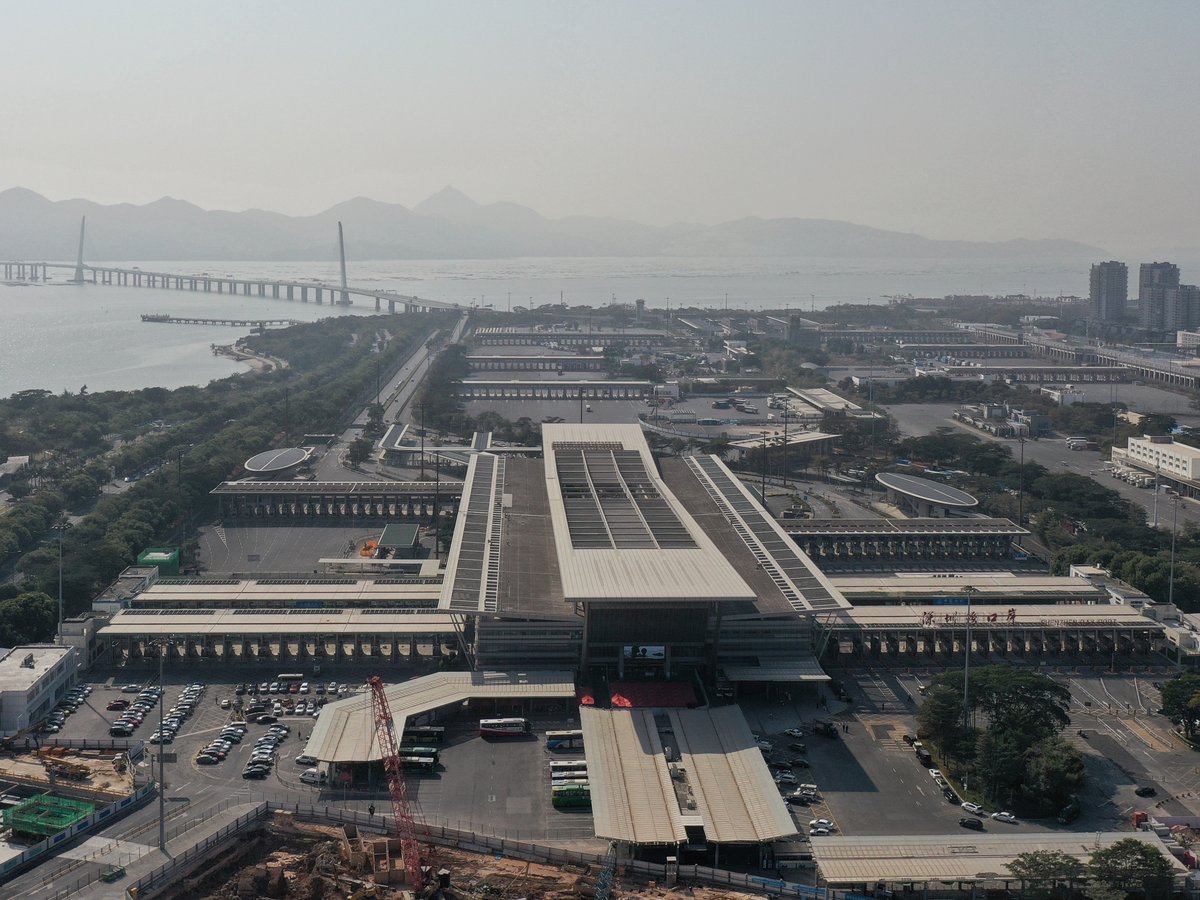
Hui Du Tong, Shenzhen Bay counter (Nanshan)
Location: West side of the arrivals hall entrance, 1/F of the Shenzhen Bay Port passenger terminal, Dongbin Road, Nanshan District. Metro: Line 13, Shenzhen Bay Port Station. Shenzhen Bay runs 'co-location' clearance, so you reach the counter right after immigration. Hours: 07:30-22:00. Fee: no extra commission, board rate. Tel 17727806312.
Hui Du Tong, Liantang counter (Luohu)
Location: Unit 201B, 2/F arrivals hall, Liantang Checkpoint, Luohu District. Metro: Line 2/8, Liantang Checkpoint Station. Hours: 07:30-22:00. Fee: no extra commission, board rate. Tel 19210470115. Two other brands (Yun Hui Tong and Yin Dui) also run counters around Luohu - worth comparing on the spot.
Official checkpoint exchange points (Shenzhen Port Office list)
The Shenzhen Port Office lists exchange points including Luohu No. 3 (Hui Du Tong), the Luohu metro-exit exchange (Yun Hui Tong), Luohu Commercial City (Yin Dui), Liantang (Hui Du Tong and Yin Dui), plus counters in Shenzhen Bao'an Airport's departure hall (Yun Hui Tong and Travelex). You can check the 'currency exchange' section of the official iPort WeChat account before you travel.
2. Bank counters: the most transparent board rate
Mainland banks publish board rates and update them daily, so you can check before you go. Using Bank of China board rates published 1 October 2026 as an example, per HK$100: cash buying 85.34, cash selling 85.68, telegraphic buying 85.34, telegraphic selling 85.68, BOC conversion rate 85.84. When you hand over HKD notes, the bank applies the cash buying rate - about RMB 85.34 per HK$100; to buy HKD notes with RMB it uses the cash selling rate, 85.68. That spread of roughly 0.4% is the bank's margin, and mainland banks usually add no separate commission on exchange.
| Bank of China board (2026-10-01) | RMB per HK$100 |
|---|---|
| Telegraphic buying | 85.34 |
| Cash buying (used when you sell HKD) | 85.34 |
| Telegraphic selling | 85.68 |
| Cash selling (used when you buy HKD) | 85.68 |
| BOC conversion rate | 85.84 |
Bank of China, Shenzhen Guomao Branch (Luohu)
Location: Units 102 & 103A, 1/F TIAN'AN International Building, 3012 Renmin South Road, Luohu District. Metro: Line 1, Guomao Station, Exit A (about 3 minutes along Renmin South Road). Good for larger amounts and an official receipt. Hotline 95566 / +86 755 2233 0077.
Bank of China, Shenzhen Shenzhen-Hong Kong Branch (Luohu)
Location: Luohu Station, Exit D (concourse level), Line 1, Nanhu Sub-district, Luohu District. It sits on the same metro concourse as the Luohu checkpoint changers, so you can compare the bank's board with the shop boards side by side. Hotline 95566 / +86 755 2233 8172.
ICBC Huaqiang Business Department (Futian, Huaqiangbei)
Location: Electronics Building, 2074 Shennan Middle Road, Futian District. Metro: Line 1, Huaqiang Rd Station, Exit A (north side of Shennan Middle Road, near Huaqiangbei pedestrian street and SEG Plaza), about 2 minutes. Handy if you are shopping in Huaqiangbei. Hotline 95588.
Bank of China, Shenzhen Houhai Branch (Nanshan / Coastal City)
Location: Units 109-112, Yude Jiayuan Phase 2, Nanshan District. Metro: Line 2, Houhai Station (interchange with Lines 8, 11 and 13), close to Coastal City and Shenzhen Bay MixC. Covers Nanshan's core and the Shenzhen Bay side. Hotline 95566.
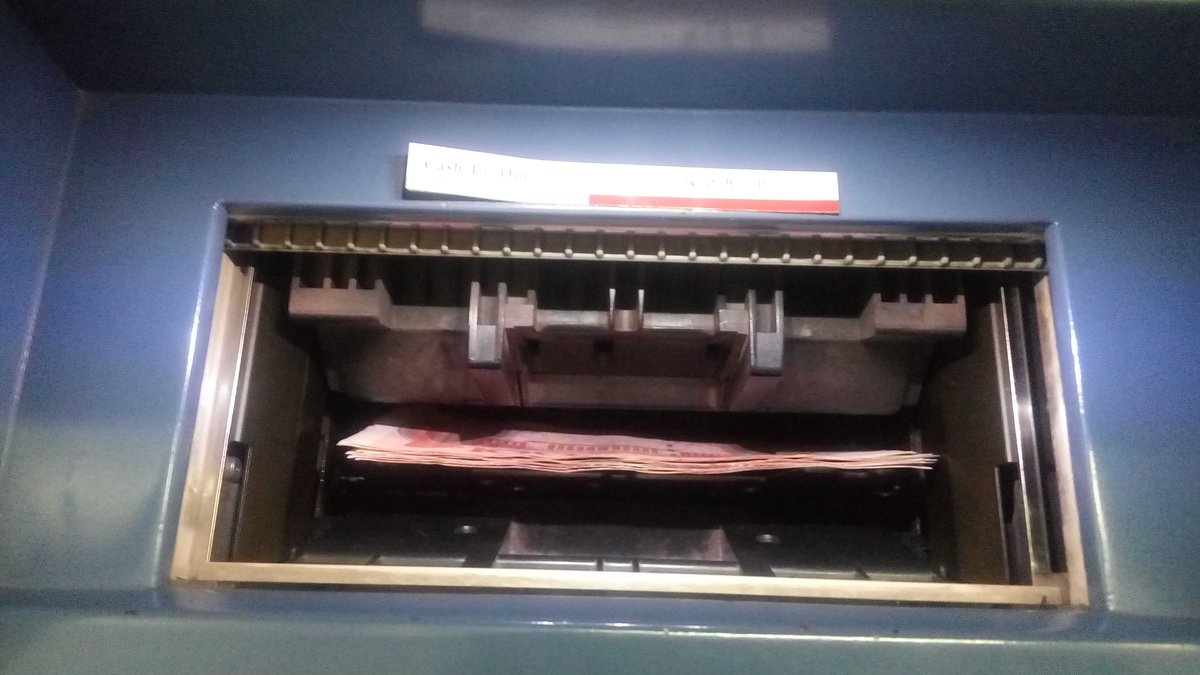
3. ATM withdrawals: fees and daily limits for Hong Kong cards
Withdrawing RMB from a Shenzhen ATM with a Hong Kong debit card converts at the UnionPay rate of the day (UnionPay's published rate on 20 September 2026 was HKD 1 = RMB 0.8559). You avoid carrying cash, but there are two costs to watch: your issuer's fee and the ATM's per-withdrawal cap. Published fees below are per transaction.
| Issuer | UnionPay withdrawal fee in the mainland | Notes |
|---|---|---|
| BOCHK (BOC Card) | Via non-BOCHK UnionPay ATMs: RMB 50 per withdrawal from an RMB account | Overseas ATM limit is preset to HK$0 - you must activate and set a limit before leaving Hong Kong |
| Hang Seng Bank | UnionPay ATM: HK$40 up to HK$5,000; HK$60 above HK$5,000 | Overseas daily limit up to HK$80,000 per card; must be pre-set with an expiry (up to 1 year) |
| HSBC Hong Kong | UnionPay ATM card: HK$20 per overseas withdrawal (PLUS card: HK$40) | Daily limit HK$80,000; HSBC One / Personal Integrated Account customers pay HK$40 per non-HSBC overseas ATM withdrawal |
| Bank of Communications (HK) | HKD UnionPay ATM card: HK$15 per withdrawal via UnionPay; dual-currency card: RMB 15 via mainland UnionPay | Overseas withdrawal must be enabled first |
There are two layers of limits. Your issuer sets a daily cap (HSBC and Hang Seng: up to HK$80,000 per card; some banks such as ICBC (Asia) and China Merchants Bank (HK): the equivalent of HK$20,000), and mainland ATMs add a per-withdrawal cap - some dispense only RMB 2,500 at a time (HSBC China, for example, states a RMB 2,500 single-withdrawal maximum), so a large draw may mean several transactions and several fees. Note too that Hong Kong-issued ATM cards have overseas withdrawals switched off by default under HKMA rules; activate it via your bank's app, online banking or an ATM before you travel, or you will not be able to withdraw at all.
4. WeChat Pay HK and AlipayHK: how the rate works
If you would rather skip cash, e-wallets are an option. WeChat Pay HK states that spending in the mainland is auto-converted and settled in HKD - the HKD wallet scans and deducts HKD at the live rate, with no need to change RMB first. AlipayHK says cross-border spending needs no pre-exchange and settles in HKD at a live preferential rate, with 0% cross-border fee on selected payment methods. In effect, the wallet's cost is that live rate: if it tracks close to the central parity, it is often better than changing notes at a checkpoint changer. But small shops, wet markets and some taxis still take cash or mainland-only wallets only, so keep a little RMB on you. Actual rates and fees follow each app's latest notice.
5. What to choose: three situations
- Exchanging on arrival and needing small notes (food, transport, markets): use a checkpoint changer - they open early and charge no commission. Hui Du Tong counters sit at Luohu, Futian and Shenzhen Bay; ask the rate and compare the counter next door.
- Changing a large amount (say over HK$20,000): use a bank counter for the official cash board rate and a receipt. Check Bank of China's HKD cash rate online first, then decide whether the checkpoint changers beat it.
- A backup or avoiding cash: draw RMB at a mainland ATM with your Hong Kong card, but factor in the issuer fee - or just scan with WeChat Pay HK / AlipayHK and skip the fee.
6. Eight things to check before you exchange
- 1. Enable overseas withdrawals first. Hong Kong-issued ATM cards have the function off by default (BOCHK's preset limit is HK$0), so an unactivated card will not work in Shenzhen.
- 2. Know buying vs selling. Selling HKD for RMB, you look at the dealer's buying rate (the higher the better); buying HKD with RMB, look at the selling rate (the lower the better).
- 3. Bring ID. Mainland bank counters check identity for exchange, and checkpoint counters display 'please show your ID' notices; larger amounts are registered.
- 4. Book ahead for large amounts. Branches may not hold enough cash; reserve via online or phone banking and collect at a chosen branch.
- 5. Watch the ATM daily cap. Some cards allow only HK$20,000-equivalent per day in the mainland, and many ATMs cap a single withdrawal at RMB 2,500-5,000, so splitting the amount means paying the fee more than once.
- 6. Never draw cash on a credit card. That is a cash advance - a fee plus daily interest.
- 7. 'No commission' is not the same as cheap. Some shops waive the fee but widen the spread; always compare the total cost, ideally across a few shops at the same moment.
- 8. Crossing the border with cash has limits. Mainland rules cap cross-border RMB notes at RMB 20,000 in value, and foreign-currency notes above the equivalent of US$5,000 must be declared to customs. Check the latest customs notice.
FAQ
Do Shenzhen checkpoint money changers charge a fee?
Usually not - they earn on the buying/selling spread. The practical approach is to ask how many RMB you will get for your HKD notes, then compare the counter next door. Larger transactions may require ID.
Is a bank or a money changer better value?
It depends on the day's board. Banks publish rates daily (Bank of China's HKD cash buying rate was RMB 85.34 per HK$100 on 1 October 2026) and suit larger amounts and receipts; checkpoint changers do not publish a single rate but compete hard and can be closer to the mid-rate. Compare both at the same time and weigh the total cost.
What does it cost to withdraw RMB with a Hong Kong card?
It depends on the issuer: BOCHK charges RMB 50 per UnionPay withdrawal via non-BOCHK ATMs; Hang Seng charges HK$40 (up to HK$5,000) or HK$60; HSBC's UnionPay ATM card charges HK$20 per overseas withdrawal; Bank of Communications (HK) charges HK$15. These are the published tariffs, which the banks may revise.
How much RMB can I withdraw per day in Shenzhen?
Two layers apply: your issuer's daily limit (HSBC and Hang Seng up to HK$80,000 per card; some banks the equivalent of HK$20,000) and the ATM's per-withdrawal cap (some dispense only RMB 2,500 at a time). Set your overseas limit and its expiry before you leave Hong Kong.
Do I need to pre-exchange RMB for WeChat Pay HK or AlipayHK?
No. Both automatically settle in HKD at the live rate, and selected payment methods carry 0% cross-border fee. Rates, fees and coverage follow each app's latest notice; keep a little cash as small shops and markets may not accept e-wallets.
Sources
- People's Bank of China / China Foreign Exchange Trade System: RMB central parity announcement (9 October 2026)
- Bank of China: FX board rates (HKD, published 1 October 2026)
- Shenzhen Port Office: Shenzhen port currency-exchange guide (18 March 2024) and port data
- Hui Du Tong (Shenzhen Qina Industrial Development Co.): official counter list and hours
- Bank of China (Hong Kong): General Banking Services Charges (2026.07 version; notice of 19 September 2026)
- Hang Seng Bank: ATM card and overseas ATM withdrawal limit pages
- HSBC Hong Kong: ATM card and debit card FAQs
- Bank of Communications (Hong Kong): ATM card services
- Bank of China branch directory (Shenzhen); ICBC (Asia) Shenzhen branch list
- UnionPay International: overseas ATM withdrawals
- WeChat Pay HK and AlipayHK official websites
Fees, rates and opening hours are subject to each institution's latest official notices.
Related articles
- Paying in Shenzhen 2026: WeChat Pay HK / AlipayHK with a Hong Kong card
- Opening a Bank Account in Shenzhen 2026: Documents, Branches, Fees
- Using AlipayHK in Mainland China 2026: Fees, Rates, Transit Codes

💬 Comments
Loading…