
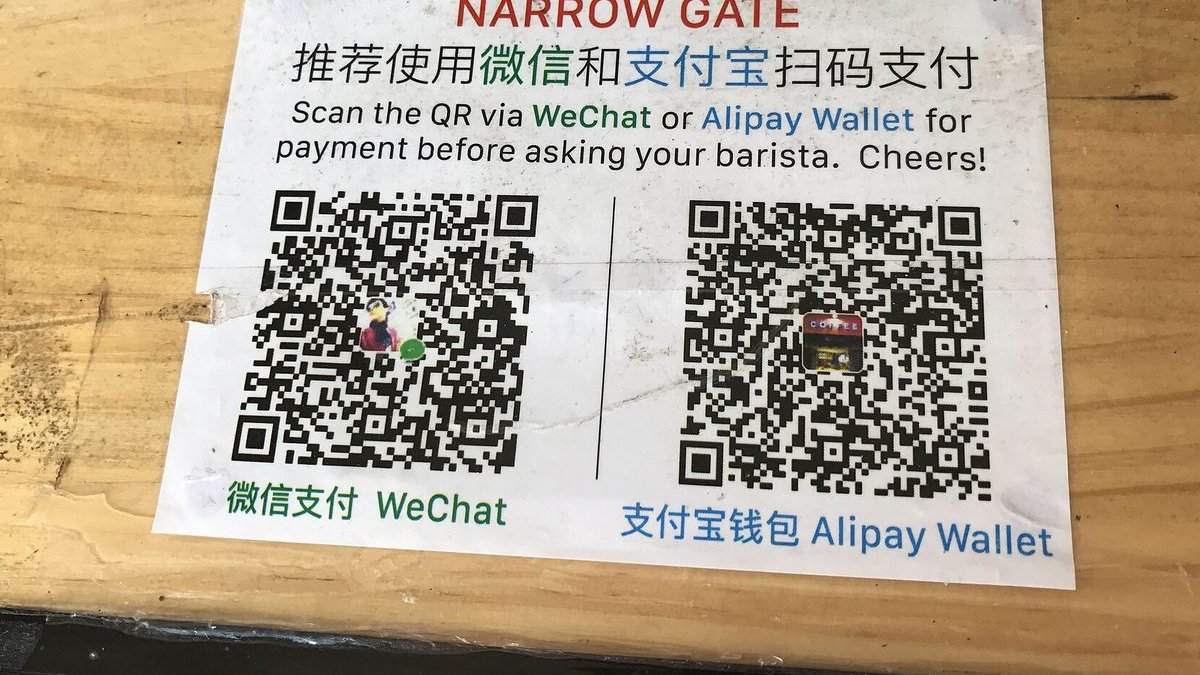
Mainland China is essentially a "cashless society": restaurants, supermarkets, ride-hailing, convenience stores, and even roadside stalls all take payment by scanning a QR code. Bringing only cash will run you into plenty of trouble — some merchants don't accept cash or can't give change, some restaurants and food-delivery platforms only accept electronic payment, and coupons and loyalty points are often limited to electronic payment. In short: when spending in Shenzhen, WeChat Pay or Alipay is basically a must — pick one.
Two options: Hong Kong version vs Mainland version
The most important thing to get straight: WeChat Pay and Alipay both come in a Hong Kong version and a Mainland version. They are different wallets and can exist at the same time:
| Version | Registration / linking | Spending in Shenzhen | Best for |
|---|---|---|---|
| WeChat Pay HK / AlipayHK (Hong Kong version) | Hong Kong phone number + Hong Kong credit card / bank account | Already supports scanning at Mainland merchants | A few trips to Shenzhen a year, simple spending |
| Mainland version WeChat Pay / Alipay | Mainland number + Mainland bank card | Fullest range of features (transit codes, government services, subsidies) | Frequent trips to Shenzhen / planning to stay long-term |
How to link a card to WeChat Pay HK
- Download WeChat;
- In the app, tap "Me" → "Services" → activate WeChat Pay HK;
- Link a Hong Kong credit card / bank account (most Hong Kong banks are supported) and complete identity verification (using your Hong Kong ID card);
- When paying in Shenzhen, show the merchant your payment code, or scan the merchant's collection code.
If you want to use the Mainland version of WeChat Pay (the fullest set of features, including claiming government subsidies and linking Mainland bank cards), you'll need to switch your wallet region to "Mainland China" and have a Mainland phone number + Mainland bank card.
How to set up AlipayHK / Mainland version Alipay
- Download AlipayHK and register with a Hong Kong phone number;
- Link a Hong Kong credit card / bank account and complete identity verification;
- Scan to pay at merchants in Shenzhen — AlipayHK already supports the Mainland merchant network; to ride the Shenzhen Metro you can use the in-app "EasyGo" code to scan through the gates.
The Mainland version of Alipay requires registering with a Mainland number, linking a Mainland bank card, and completing facial-recognition verification; after that you can use transit codes, pay utility bills, and use Meituan and Didi and so on.
Is cash still accepted?
Cash is legal to use in Shenzhen, and large shopping malls, hotels and chain stores usually accept it. But in practice you'll run into: some small shops find giving change a hassle, and some chain stores' scan-to-order process steers you toward electronic payment. It's best to carry a small amount of RMB as backup (say ¥200–500) and rely mainly on electronic payment.
Also, according to the policy direction (including the 2026 consumer-goods subsidy document), the authorities explicitly require "support for diverse payment methods including mobile payment, bank cards and cash, safeguarding consumers' right to choose how they pay", so in theory merchants should not refuse cash.
Real-world scenarios at three checkpoints
Around Luohu Checkpoint
Exit through Exit A of Luohu Station on Line 1 — almost every shop around Luohu Commercial City and Dongmen Old Street takes QR-code payment; restaurants and supermarkets at KK Mall (Guomao Station, Line 1) accept WeChat and Alipay.
Around Futian Checkpoint
Cross at Futian Checkpoint Station on Line 4, and two stops later you're at Shopping Park Station — the malls, restaurants and convenience stores around Galaxy COCO Park are basically all QR-code payment; chain restaurants in the office buildings near Convention & Exhibition Center Station also accept electronic payment.
Around Shenzhen Bay Checkpoint
At Shenzhen Bay Checkpoint Station on Line 13, heading to Coastal City in Nanshan or Shenzhen Bay MixC, most shops inside the malls take QR-code payment, and some international brand counters also accept credit cards.
Money-saving tips
- Watch for exchange-rate offers: some Hong Kong credit cards / e-wallets offer exchange-rate discounts or rebates on spending in Shenzhen;
- Use coupons: Meituan and Dianping often have group-buy deals, which usually require electronic payment to purchase;
- Turn on small-amount password-free payment: scanning to pay for meals and shopping is much faster;
- Easy refunds: refunds on electronic payments go straight back to your account, more convenient than cash.
Safety notes
- Set a payment password plus fingerprint / face unlock — don't rely on your screen-lock password alone;
- Don't scan QR codes of unknown origin, and don't rent out or lend your account;
- If you lose your phone, immediately log out and freeze your account from another device.
Cash vs electronic payment: what's the right split?
For trips to Shenzhen, the practical advice is "electronic payment first, a little cash as backup". The vast majority of situations in the Mainland just need a QR scan, but cash is steadier in these cases:
- Wet markets, roadside stalls and old-style small shops (some only take cash or use a personal collection code).
- When your phone is out of battery, the network is unstable, or a system is under maintenance.
- Covering costs for an older relative or child travelling with you — cash saves the hassle of transfers.
It's advisable to carry the equivalent of about HK$300–500 (≈¥257–428) in RMB cash as backup, and use WeChat Pay HK / AlipayHK for the rest. Note that some merchants may "not give change" or not accept large cash notes; in practice, switching to electronic payment is fastest when that happens.
FAQ
Can I use electronic payment without a Mainland bank account?
Yes. Link a Hong Kong credit card or bank account to WeChat Pay HK / AlipayHK and you can spend in Shenzhen without opening a Mainland account. You only need a Mainland account to unlock the full feature set (claiming government subsidies, linking Mainland cards).
Do I need both WeChat Pay HK and AlipayHK?
It's best to install both. Most Mainland merchants accept either, but some platforms and government services only take Alipay, and some small shops or wet markets only take WeChat — having both is the safest.
Are there cross-border fees when paying with a Hong Kong card?
The exchange rate is generally calculated by the card-issuing bank or the wallet provider, and some Hong Kong cards charge a cross-border / foreign-currency fee (commonly 1%–2%). Before a large purchase, it's best to check the actual amount charged in the app.
What if a merchant refuses cash?
You can politely ask, or take your business next door. For your own convenience, relying mainly on electronic payment is the most practical.
If I want to bring cash, where's the best place to exchange it?
Money changers in Hong Kong usually offer better rates; withdrawing from an ATM in the Mainland with a Hong Kong bank card incurs a fee, so compare rates and fees before you set off.
The practical mindset: when heading to Shenzhen, don't fear "no cash" — fear "no network" and "no battery". Packing a power bank and a backup payment method is more practical than carrying lots of cash.
WeChat Pay HK vs AlipayHK: feature comparison
| Feature | WeChat Pay HK | AlipayHK |
|---|---|---|
| Linking | Hong Kong credit card / bank account / FPS | Hong Kong credit card / bank account / balance |
| QR-code spending in the Mainland | Supported | Supported |
| Shenzhen Metro transit code | "Travel Services" | "EasyGo" |
| Ride-hailing in the Mainland | Call Didi via WeChat Mini Program, charged to your Hong Kong wallet | Call a ride via "Travel" in the app |
| Government subsidies / consumption vouchers | Generally requires the Mainland version | Generally requires the Mainland version |
| Ecosystem | WeChat Mini Programs, official accounts | Alibaba ecosystem (Taobao, some Meituan scenarios) |
Both apps let you link a Hong Kong credit card for spending in the Mainland, with the exchange rate calculated by the card-issuing bank or wallet provider; the actual scope of use and fees are subject to the latest official announcements.
4 common pitfalls in a cashless city
- Scan to order before you eat: many chain restaurants require you to scan the QR code on the table to order and pay yourself, with no cash option — on your first visit, just ask the staff;
- No staffed payment at car parks: most car parks require scanning a code or automatic licence-plate recognition to pay, so if you're driving to Shenzhen, set up your payment tools in advance;
- Self-checkout at convenience stores: some convenience stores only have self-service machines that require QR-code payment and may not take cash;
- Attractions require booking and payment in advance: some free venues require real-name booking via their official account and sometimes a deposit — without electronic payment you can't get in.
A reminder: it's best to activate your payment, link your credit card and complete identity verification while you're still in Hong Kong; discovering in Shenzhen that you can't set it up means hunting for Wi-Fi on the spot and asking strangers for help — a letdown and a waste of time.
— Compiled by the editorial team of HKSZ Life, your guide to life in Shenzhen; wallet features and fees are subject to the latest official announcements from WeChat Pay HK / AlipayHK.

💬 Comments
Loading…