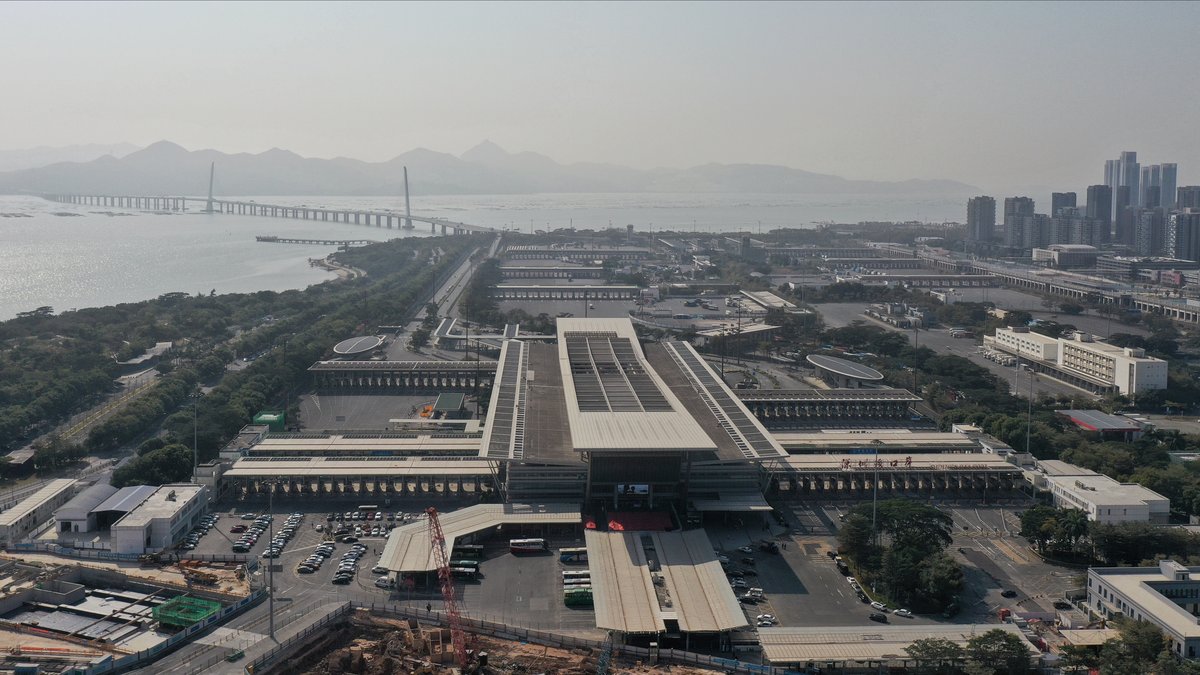
Shenzhen now calls itself China's "supercharging city": 1,098 ultra-fast charging stations of 480 kW and above, plus 536,000 charging piles across the city, according to the city's development and reform commission (figures published 1 July 2026). For Hong Kong drivers heading to Shenzhen, however, the first problem is always the same: Hong Kong cars use European connectors (Type 2 and CCS2), while mainland chargers use the Chinese national standard, GB/T. This guide covers charging only — charger types and standards, how the official pricing structure works, which apps Hong Kong drivers actually use, and real charging points at the ports, in shopping malls and at expressway service areas, each with its metro line and exit. Prices always follow what the operator's app shows on the day.
Charger types and why GB/T does not fit Hong Kong cars
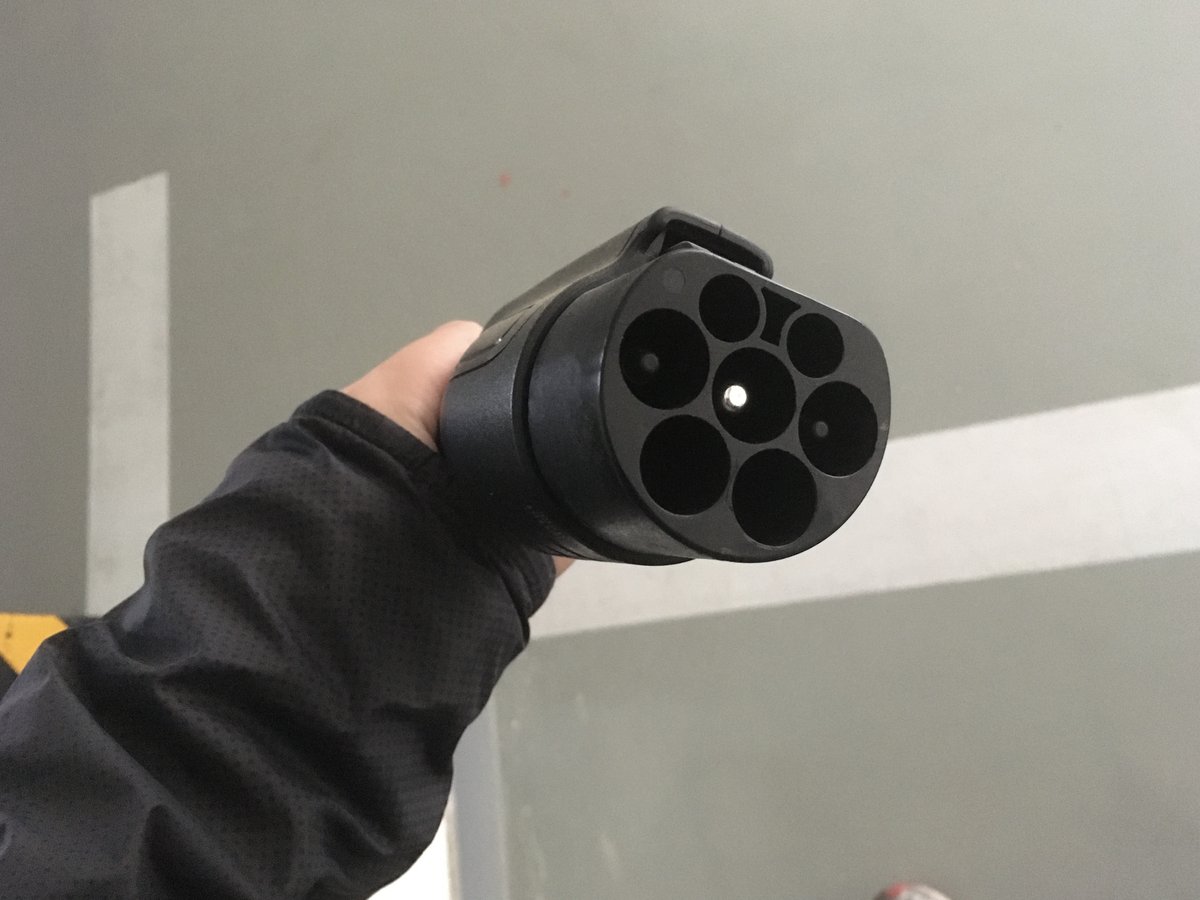
Mainland charging connectors are defined by the GB/T 20234 series: Part 1 (GB/T 20234.1-2023) covers general requirements, Part 3 (GB/T 20234.3-2023) the DC coupler and Part 4 (GB/T 20234.4-2023) the high-power DC coupler — all current standards under China's national standards system. Visually the difference is simple: the GB/T AC (slow) plug has seven pins, the GB/T DC (fast) plug has nine, whereas Hong Kong cars use the IEC 62196 Type 2 AC plug and the CCS2 DC plug.
- AC slow charging: usually 7 kW, 11 kW or 22 kW — the overnight option, typical of mall car parks, hotels and residential estates.
- DC fast charging: mostly 60–120 kW, taking a car from 20% to 80% in roughly 30–40 minutes. This is the tier Hong Kong drivers use most.
- Ultra-fast / flash charging: 250–480 kW and above. Shenzhen's official line is that 1–2 seconds of charging adds 1–2 km of range; the 480 kW liquid-cooled terminal at the Shenzhen Blue Shenkang hub is described officially as adding 250 km of range in about five minutes.
To use a mainland charger, a Hong Kong car needs an adapter, and there are two separate products: GB/T to Type 2 for AC, and GB/T to CCS2 for DC. They are not interchangeable. The Hong Kong Transport Department's advisory note on EV charging adapters (2nd edition) points out that charging standards, communication signals and connector designs differ between regions and that compatibility and safety must be checked before use. Hong Kong's Environmental Protection Department also maintains a public list of GB/T charging facilities in Hong Kong, updated 7 October 2026, showing 29 medium-speed, 49 fast and 30 high-speed GB/T chargers — including the Hong Kong-Zhuhai-Macao Bridge port car parks 1 and 2 — so you can test your adapter combination before crossing.
How big is the network? The official numbers
- 1,098 ultra-fast stations and 536,000 charging piles — Shenzhen Development and Reform Commission, "Supercharging City" progress report, 1 July 2026.
- More ultra-fast stations than petrol stations, and more charging guns than fuel nozzles — a first globally, per the Shenzhen government's August 2025 figures (1,057 stations, over 487,000 piles at the time).
- A "one-kilometre supercharging circle" in Futian district — published by the Futian district government.
- Guangdong province targets over 3 million charging facilities by the end of 2027, under its provincial action plan for high-quality charging infrastructure.
What matters for visitors is not the total, but that finding a charger in central Shenzhen is easy; finding one that physically fits your car, or one with a CCS2/Type 2 ("Euro-standard") gun, takes a little planning — and avoiding the lunchtime and early-evening peaks.
What charging costs: energy fee plus service fee
Mainland charging bills are split into an energy charge plus an operator service fee. Guangdong's pricing notice on new-energy vehicle electricity (Yue Fa Gai Jia Ge [2018] No. 313, still in force) provides that in Shenzhen, charging facilities with their own meters are billed under the "large user" or "high demand" tariff corresponding to their declared capacity; charging facilities province-wide are exempt from the basic capacity charge; and the maximum service fee set by local price authorities may not exceed CNY 0.8 per kWh.
Separately, from April 2026 several outlets reported a national management measure on charging infrastructure requiring energy and service fees to be displayed separately and capping public service fees at CNY 0.5 per kWh. Those reports have not been matched by a publicly posted official text, so treat them as indicative only: the price shown in the operator's app or mini-program is what you pay.
| Setting | Published all-in range (CNY per kWh) | Notes |
|---|---|---|
| Urban public fast charging | about 1.1–2.0 | Off-peak (roughly 00:00–08:00) can fall to about 0.9 |
| Mall / office destination charging | about 1.2–1.8 | Parking usually charged separately |
| Expressway service areas | about 1.5–2.8 | Dearer on public holidays; allow 40 minutes |
| Private home charger | about 0.6–0.9 | No service fee, residents only |
Two extras to budget for: parking fees (malls and port car parks charge separately) and idle-occupancy fees (some sites fine you for staying plugged in after charging ends).
The practical rule of thumb: a 60 kWh battery charged from 20% to 80% takes roughly 36 kWh, which in a city fast-charging setting costs somewhere between CNY 40 and CNY 70 once the energy fee and service fee are added. Charging in town during the day and again overnight at a hotel car park is usually cheaper than relying on expressway service areas, and it keeps you out of the holiday queues.
What to sort out before you cross the border
- Confirm your car's inlet type. Most Hong Kong EVs use Type 2 for AC and CCS2 for DC. Some older models have only a Type 2 socket with no DC capability, in which case only AC posts are useful — plan longer stops.
- Buy or borrow both adapters and label them. Keep the AC and DC units apart so you do not force the wrong one into a post; forcing a connector can damage pins and the car inlet.
- Install at least one mainland charging app before you leave. Signal at the border is fine, but a saved payment method and a completed registration make the first plug-in much quicker.
- Check your car's maximum DC charging rate. A 480 kW post does not make a car that peaks at 60 kW charge faster; expect the taper above 80% state of charge.
- Keep a note of your licence plate. Some charging apps, mall car parks and port car park reservation systems ask for the mainland or Hong Kong plate details.
Which apps do Hong Kong drivers use?
- iShenzhen app ("Super Charging" section) — the city government's official map, with one-tap navigation and one-tap charging.
- Shunyichong — China Southern Power Grid's platform, used by most Shenzhen Power Supply Bureau sites.
- eCharging — the State Grid platform; the Convention and Exhibition Centre car park, for example, runs on it.
- Shenba Charging app + "Charging in Hand" mini-program — Shenzhen Bus Group. Search the Chinese term "歐標" (Euro standard) inside the mini-program to filter for CCS2/Type 2 guns, then scan the QR code on the post and prepay.
- Star Charge, TELD, Xiaoju Charging, Yunkuaichong, Kuaidian — third-party operators that run most mall and office car parks.
- Amap / Alipay "Charging" — aggregated maps showing live availability and prices without installing another app.
WeChat Pay and Alipay (mainland version) cover almost all payments; some sites also accept AlipayHK or WeChat Pay HK, but not all, so test a small payment before relying on it. Registering with a Home Return Permit is normally fine.
Charging around the border crossings
- Car park reservations at port parking: since 7 February 2024 the Shenzhen Port Office has required advance booking at the public car parks of Luohu, Man Kam To, Shenzhen Bay, Futian and Liantang ports.
- Futian port public car park: the port authority's own notice advertises "charge for ten minutes, park free for two hours" — rules as posted on site.
- Luohu port public car park: also reservation-only; charging bays as marked on site.
- Shenzhen Bay port: Dongbin Road, Nanshan, served by metro Line 13 Shenzhen Bay Port station; the port car park has EV charging.
- New Huanggang port (opened 2026): China Southern Power Grid's Futian bureau has said the new port's power system includes a dedicated circuit for EV chargers among its ten 10 kV feeds, and level L5 has a convenience centre with emergency charging.
Note that cars under the Northbound Travel for Hong Kong Vehicles scheme may only enter Guangdong via the Hong Kong-Zhuhai-Macao Bridge port; the Shenzhen crossings mainly serve two-plate and public transport vehicles. If your trip runs from Zhuhai to Shenzhen, the charging points around Shenzhen's ports are still useful.
Booking a port car park is worth doing the night before at weekends and on public holidays, because the public car parks at Luohu, Futian and Shenzhen Bay fill quickly. Follow the "Shenzhen Ports" official account, choose the car park, the date and the arrival window, and keep the confirmation in the app — the barrier reads the plate. If you are only dropping passengers off, use the designated drop-off lanes rather than queueing for a bay.
13 real charging points in town (Luohu, Futian, Nanshan — with metro exits)
Every site below is documented publicly. Prices are published ranges; the operator's app is the final word.
Futian district
- Shenzhen Blue charging hub, Shenkang — Qiaoxiang 2nd Road, Futian. Futian's largest car supercharging station and Shenzhen's first integrated solar, storage, ultra-fast charging and V2G hub, with three 480 kW liquid-cooled terminals, hundreds of bays and CCS2/Type 2 guns. Officially described as adding 250 km of range in about five minutes. Nearest metro: Line 2 Shenkang or Qiaoxiang station, then a short taxi ride. About CNY 1.2–1.9 per kWh.
- Gongjiao Building charging station (next to UpperHills) — inside the Gongjiao Building car park at the junction of Lianhua Branch Road and Caiyun Road, Futian, about 600 m from UpperHills. Look for the blue "Euro standard" sign on the posts (Shenzhen Bus Group); there is a rest area and free Wi-Fi, and payment is automatic through the Shenba Charging app. Nearest metro: Line 2 Lianhua West or Line 3 Lianhuacun, then drive or take a taxi.
- Shenzhen Convention and Exhibition Centre charging station — level B2 of the underground car park, Fuhua 3rd Road, Futian; metro Lines 1 and 4, Convention and Exhibition Centre station, exit C. About 18 fast posts (up to 120 kW) and 12 slow posts under State Grid's eCharging; roughly CNY 1.4–1.8 per kWh, with adjustments during major fairs. The surface car park also hosts a fully liquid-cooled demonstration supercharger built by Shenzhen Power Supply Bureau with Huawei.
- Lianhuashan Park car park charging station — Lianhuashan Park car park (southeast gate), 6030 Hongli Road, Futian; metro Lines 3 and 4, Children's Palace station, about a 10-minute walk. Eight DC fast posts (60 kW each) and four AC posts run by China Southern Power Grid's Shunyichong; around CNY 1.2–1.6 per kWh, dropping to about CNY 0.9 overnight. Handy if you want to walk the park while charging.
Luohu district
- Dongmen Old Street charging station — underground car park, 2068 Dongmen Middle Road, Luohu; metro Lines 1 and 3, Laojie station, exit A. About six fast and twelve slow posts under Xiaoju Charging, around CNY 1.5 per kWh. Dongmen gets busy at weekend afternoons; mornings or after dinner are easier.
Nanshan district (Shenzhen Bay and Shekou)
- Poly Culture Plaza charging station (Houhai, near Coastal City) — Poly Culture Plaza car park, Houhaibin Road, Nanshan; metro Lines 2 and 11, Houhai station, walking distance from Coastal City. About eight fast and eight slow posts under Xiaoju Charging, roughly CNY 1.4 per kWh with member discounts.
- Sea World charging station — Sea World car park, Taizi Road, Shekou, Nanshan; metro Lines 2 and 12, Sea World station. About eight fast and eight slow posts under Xiaoju Charging at roughly CNY 1.5 per kWh, sometimes higher on holidays. Eat and shop while the car charges.
- Yuehai Subdistrict charging hub — west of the junction of Kexing Road and Keji Zhong 3rd Road, Nanshan, one of Shenzhen Bus Group's larger stations, about 2.1 km from MixC World and close to Tencent's Binhai tower and Talent Park. Nearest metro: Line 1 SZU or Hi-Tech Park, then a short ride.
- Liuxuesheng Chuangye Building charging hub — Phase 2 of the Overseas Chinese Students Entrepreneurship Building, Yuehai Subdistrict, Nanshan; Shenzhen Bus Group's second supercharging station, operated by Shenzhen Bus New Energy. It also appears in Hong Kong's EPD list of GB/T charging facilities. Nearest metro: Line 1 SZU, then taxi.
- MixC World Euro-standard charging (mall area) — 9668 Shennan Boulevard, Nanshan; metro Line 1, Hi-Tech Park station, exit A. Shenzhen Bus Group's first Euro-standard stations were built around MixC World, UpperHills and Sam's Club, typically with three to six CCS2/Type 2 guns per site.
UpperHills and the Sam's Club at the Inlane Centre are also covered by Shenzhen Bus Group's Euro-standard network, so a shopping stop doubles as a charge.
| Charging point | Area | Nearest metro | Published price |
|---|---|---|---|
| Shenzhen Blue hub, Shenkang | Futian | Line 2 Shenkang / Qiaoxiang, then taxi | CNY 1.2–1.9 per kWh |
| Gongjiao Building station | Futian | Line 2 Lianhua West / Line 3 Lianhuacun | Per app (Shenba Charging) |
| Convention and Exhibition Centre | Futian | Lines 1/4, Convention and Exhibition Centre, exit C | CNY 1.4–1.8 per kWh |
| Lianhuashan Park car park | Futian | Lines 3/4, Children's Palace, 10 min walk | CNY 1.2–1.6 per kWh |
| Dongmen Old Street | Luohu | Lines 1/3, Laojie, exit A | About CNY 1.5 per kWh |
| Poly Culture Plaza | Nanshan | Lines 2/11, Houhai | About CNY 1.4 per kWh |
| Sea World | Nanshan | Lines 2/12, Sea World | About CNY 1.5 per kWh |
| Yuehai Subdistrict hub | Nanshan | Line 1 SZU / Hi-Tech Park | Per app |
| Overseas Students Entrepreneurship Building hub | Nanshan | Line 1 SZU, then taxi | Per app |
| MixC World Euro-standard posts | Nanshan | Line 1, Hi-Tech Park, exit A | Mall rate, per app |
| Futian port public car park | Futian | Lines 4/10, Futian Checkpoint | Charge 10 min, park 2 hours free |
| Shenzhen Bay port car park | Nanshan | Line 13, Shenzhen Bay Port | Port parking, reservation required |
| Luohu port public car park | Luohu | Line 1, Luohu | Port parking, reservation required |
Expressway service areas: the last top-up before Hong Kong
- Fuyong rest area supercharging station, Guangzhou-Shenzhen Expressway (Bao'an) — one of the sites the Shenzhen government cites for full charging coverage at expressway service areas.
- Changzhen service area supercharging station, Shenzhen Expressway / Outer Ring Expressway (Guangming) — named in the same official round-up.
- Machong service area ultra-fast station, Guangzhou-Shenzhen Yanjiang Expressway (Dongguan) — the Dongguan development and reform bureau says it delivers up to 480 kW with fully liquid-cooled technology, "five minutes of charging, 300 km of range", and was Guangdong's first expressway service-area supercharger.
- Province-wide scale — 511 expressway service areas in Guangdong have charging stations, with 2,256 charging piles, 3,731 charging bays and 65 supercharging stations, giving near-complete coverage of the motorway network.
Practical tip: on the way back, aim to enter a service area before 11:00 or after 20:00 to dodge the lunch and dinner rushes. Most are run by third-party operators, so check live availability and price in the app before you pull in.
One planning caveat: the Northbound Travel scheme requires vehicles to cross at the Hong Kong-Zhuhai-Macao Bridge port, so a Zhuhai-to-Shenzhen run usually means the Guangzhou-Shenzhen Yanjiang Expressway or the Coastal Expressway rather than the shorter Shenzhen-only hops. Those routes pass service areas such as Machong in Dongguan, which is why the network-wide coverage figure matters more than any single stop. If you drive a car without DC charging capability, use the expressway stop for a meal and a top-up on an AC post, or plan a longer city stop instead.
Eight practical notes for EV drivers heading to Shenzhen
- Buy both adapters: GB/T to Type 2 for AC posts and GB/T to CCS2 for DC posts. They are not interchangeable, and a first trip is easier with both.
- A Hong Kong Tesla will not simply plug into a mainland Supercharger: mainland Superchargers use the GB/T DC connector, so a "GB DC" adapter is needed and published information suggests only some models (for example Model 3 and Model Y) are supported. Confirm with the manufacturer first.
- Choose certified, temperature-monitored adapters: these carry high currents, and poor-quality units carry overheating risk. The Transport Department's advisory note flags differences in standards and communication protocols.
- Warranty and insurance: if a fault follows third-party adapter use, some manufacturers or insurers may decline a claim, so check your position before travelling.
- Test at home first: the EPD's GB/T facility list names public GB/T points in Hong Kong, including the Hong Kong-Zhuhai-Macao Bridge port car parks, so you can trial your setup before crossing.
- Prefer Euro-standard posts: Shenzhen Bus Group's posts carry a blue "Euro standard" mark and accept Hong Kong cars directly; filter for them in the "Charging in Hand" mini-program.
- Watch idle-occupancy and parking fees: mall sites usually charge parking separately, and some levy a fee if you stay plugged in after charging finishes. Port car parks require booking.
- Plan your range: top up in town from about 30%, stop every 200 km or so on the motorway and allow 30–40 minutes per stop rather than gambling on the last 10%.
- Do not leave an AC adapter running unattended overnight in a public car park unless the site is manned or monitored; heat build-up at the connector is the main risk with third-party adapters.
- Keep the app receipt: it shows the split between energy fee and service fee, which is useful if you dispute an idle-occupancy charge or need to reclaim parking.
Finally, remember that charging in Shenzhen is generally cheaper than in Hong Kong once you leave the expressway network: city fast charging at roughly CNY 1.1–2.0 per kWh is well below typical Hong Kong public tariffs, which is why many drivers top up before heading back to the bridge. Do the arithmetic on your own car — battery size, average consumption and the day's tariff — and the whole trip is easy to budget.
FAQ
Can a Hong Kong car charge without an adapter?
Generally no. Hong Kong cars have Type 2 (AC) and CCS2 (DC) inlets, while mainland posts use the seven-pin GB/T AC and nine-pin GB/T DC plugs, so they will not mate physically and an adapter is required. The exception is a site with CCS2/Type 2 ("Euro-standard") guns, such as those run by Shenzhen Bus Group, where a Hong Kong car plugs in directly.
Do I need a mainland phone number or bank card?
Most operator apps and mini-programs accept a Home Return Permit for registration, and payment is by WeChat Pay, Alipay (mainland) or prepayment inside the app. Some sites take AlipayHK or WeChat Pay HK, but not all, so try a small payment first.
Can I use a Shenzhen Tesla Supercharger?
Not directly. Mainland Superchargers use the GB/T DC connector, so a "GB DC" adapter is required and only some models are reported to support it. A third-party fast charger or a Euro-standard post is the safer bet; check the manufacturer's latest statement.
Will expressway service areas be queued?
Weekdays are usually fine; holiday peaks around lunch and dinner can queue. Coverage across Guangdong is close to complete, but the number of posts per site is limited, so check live availability, avoid 11:00–13:00 and 17:00–20:00 and allow 30–40 minutes.
Is there a fee for staying parked after charging finishes?
Some sites charge an idle-occupancy fee once charging has finished, with the rule posted on the post or in the order page of the app, and car park parking fees apply separately. Check the site's notice on arrival.
Sources
- Shenzhen Development and Reform Commission, "Supercharging City" progress: 1,098 ultra-fast stations and 536,000 charging piles (1 July 2026)
- Shenzhen government online: Shenzhen accelerates "Supercharging City 2.0" (11 August 2025), citing the Fuyong rest area and Changzhen service area superchargers
- Shenzhen Port Office: Futian port public car park "charge ten minutes, park free for two hours"; port car park reservation system (from 7 February 2024)
- Guangdong Development and Reform Commission, notice on electricity prices for new-energy vehicles (Yue Fa Gai Jia Ge [2018] No. 313, in force)
- National standards GB/T 20234.1-2023, GB/T 20234.3-2023 and GB/T 20234.4-2023
- Hong Kong Environmental Protection Department, list of public GB/T charging facilities (updated 7 October 2026)
- Hong Kong Transport Department, advisory note on the use of EV charging adapters (2nd edition)
- Dongguan Development and Reform Bureau: Machong service area ultra-fast charging station on the Guangzhou-Shenzhen Yanjiang Expressway (up to 480 kW)
- Shenzhen Bus Group Euro-standard charging station information (media reports, April 2024)
- Guangzhou Daily: 2,256 charging piles across Guangdong expressway service areas (January 2025)
- Futian District, Shenzhen: implementation rules for new-energy vehicle charging and swapping facilities (2026, effective 20 June 2026)
Prices, opening hours and booking rules are subject to the latest official and operator announcements.
Related articles
- Northbound Travel for Hong Kong Vehicles 2026: quotas, booking and inspection
- Parking at Shenzhen border crossings 2026: Luohu, Futian and Shenzhen Bay charges
- Shenzhen's non-local vehicle restriction rules 2026: exempt roads near ports
💬 Comments
Loading…