
"Checking Dianping before eating" is a habit for mainlanders, equivalent to travellers checking OpenRice—but Dianping has far more reviews and features (queue ticketing, table reservations, group-buy vouchers). Once travellers learn to use it, finding food up north instantly means far fewer chances of stepping on a landmine.
What is Dianping good for?
- Finding restaurants: Search "Shenzhen hotpot" or just look at nearby restaurants, with ratings, reviews and per-person spending.
- Avoiding landmines: Look at low-score reviews and real photos, so you're not just seeing ads and fake reviews.
- Queue ticketing: For popular restaurants you can grab a number in the app first, so you don't have to wait slowly on site.
- Table reservations: Some restaurants let you book a table directly, good for a big group.
- Group-buy deals: Linked with Meituan, restaurant group-buy vouchers can be bought here too.
Setup guide for travellers
- Download the "Dianping" app, or use the WeChat mini-program.
- Register with a phone number—a Hong Kong number works too, but a mainland number receives verification codes much more smoothly.
- Set your location to "Shenzhen", and the home page automatically recommends nearby restaurants.
- Link WeChat/Alipay for payment, and buy group-buy vouchers directly.
How to read reviews accurately?
- Prioritise "Latest": Restaurant quality changes, and a good review from two or three years ago may no longer be accurate; reviews from the last month are the most practical.
- Read low-score reviews: The most genuine, especially watch for mentions of hygiene, service, or chaotic queuing.
- Look at user real photos: Photos uploaded by users are the most trustworthy; merchant official photos are mostly filtered.
- Watch the "per-person" figure: The per-person spending shown on Dianping helps you control your budget; for the same shop, lunch and dinner can differ hugely.
- Check "business hours": Many mainland restaurants rest from 2 to 5 in the afternoon; if you don't check clearly you'll find the door shut.
Queue ticketing guide
- On the restaurant page, tap "Queue for a number" or "Reserve".
- Choose the number of people and arrival time; once the ticket is grabbed it shows how many tables are ahead.
- Near the restaurant, watch for your number to be called; if you miss it you usually have to queue again.
- Some busy shops (e.g. chain sauerkraut fish, hotpot) require waiting over an hour on weekend evenings; it's best to grab a ticket before 5 in the afternoon.
Real examples: where it's useful in the three checkpoint districts
Luohu District
After crossing at Luohu Checkpoint, take Line 1; restaurants are densest around Guomao Station and Laojie Station. The chain sauerkraut fish brand has a branch in Kingglory Plaza (Line 1 Guomao Station, direct mall access); if you want Cantonese food or soup, the KK Mall area has plenty of choices (Line 1 Grand Theatre Station). The per-person reviews for these shops on Dianping mostly fall in the ¥41–100 to ¥151–300 range.
Futian District
Convention & Exhibition Center Station (Lines 1/4), Shopping Park Station (Lines 1/3) and Huaqiangbei Station (Lines 2/7) are Futian's three big food hubs. Chain hotpot, Sichuan food and Japanese yakiniku all have branches here; the office district is crowded at lunch, so it's best to go early or reserve a table.
Nanshan / Shenzhen Bay
Nanshan Coastal City (Line 2/11 Houhai Station) is one of Shenzhen's biggest concentrations of mall restaurants with long queues; grilled fish, Sichuan food and Chaoshan food chains all have branches; the Shenzhen Bay MixC area leans mid-to-high price, good for meeting people for a meal.
Checkpoint transport quick reference
- Luohu Checkpoint: Line 1 Luohu Station Exit A; once you cross you're heading towards Dongmen/Guomao.
- Futian Checkpoint: Line 4 Futian Checkpoint Station, connecting to Line 10 for Bantian and Longhua.
- Shenzhen Bay Checkpoint: Line 13 Shenzhen Bay Checkpoint Station, fastest to Nanshan, Houhai and Shekou.
Tips for travellers
- Dianping and Meituan reviews are shared; after reading reviews you can go straight to Meituan to buy group-buy vouchers.
- Some restaurants have "Dianping offers": writing a review can get you a snack or a discount.
- If your reservation succeeds, remember to arrive on time; mainland restaurants mostly release the table if you're late.
- Leaving a review after spending accumulates points, which can be exchanged for vouchers later.
Choosing a shop by occasion: example references
A few friends having hotpot
The Chaoshan beef hotpot chain (Baheli) has branches around Luohu Guomao Station and Nanshan Taoyuan Station, at about ¥101–150 per person; the chain sauerkraut fish (Tai Er) has branches in Luohu Kingglory Plaza (direct mall access at Guomao Station) and around Futian Shopping Park Station, at ¥41–100 per person.
Wanting Cantonese food, hosting guests
Yuecai Wangfu has branches in Luohu KK100 Space (Grand Theatre Station), Futian Ping An Finance Centre (Shopping Park Station Exit D), and Nanshan KK100 Plaza, at ¥151–300 per person (the Ping An Finance Centre branch is ¥301 and above); all three checkpoint districts have one, so no need to cross districts.
Cheap private kitchens, neighbourhood prices
Dongmen Yinyuan (4th floor, Dongmen Hongzhan Center City, Laojie Station) is ¥41–100 per person; reviews mention a two-person meal at about ¥178 with five dishes and a soup; for mid-price you can pick Da Ge Fan (about ¥101–150 per person).
Using Dianping to find "new shops" and "seasonal things"
- On the home page "Nearby", choose "Latest" sorting to see shops that have just opened.
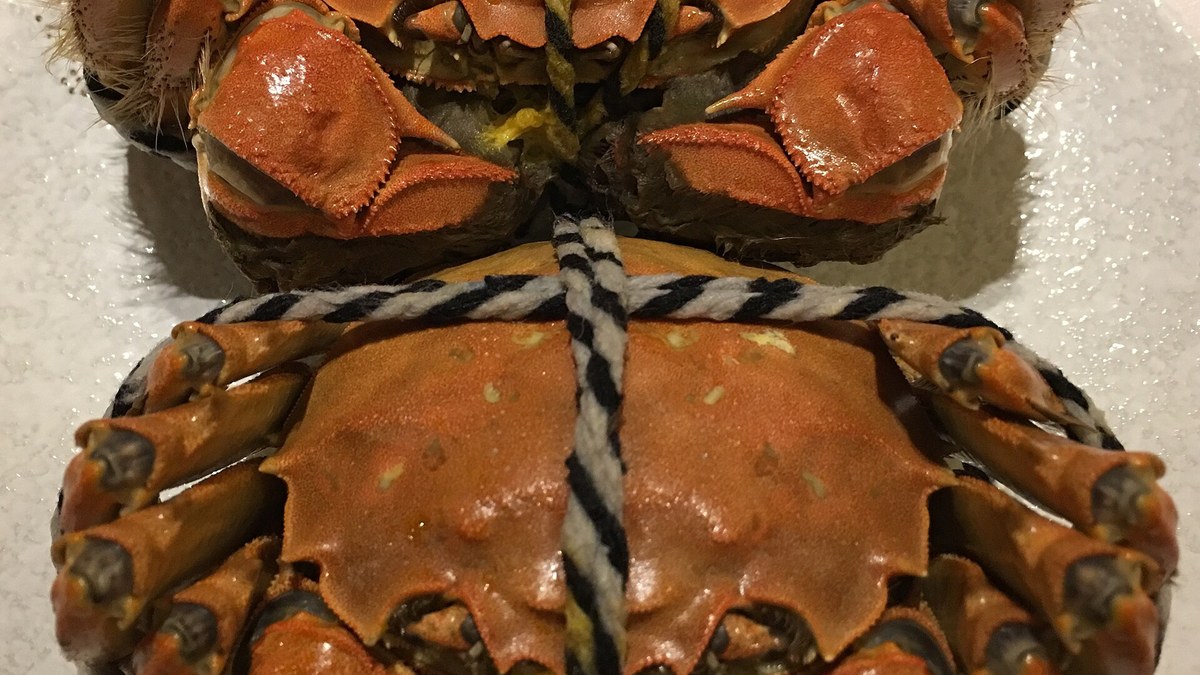
- Searching a specific dish name (e.g. "hairy crab", "mooncake") is far more accurate than searching a category.
- Watch for the "merchant offers" tag; some shops have discount vouchers or free snacks.
- Use the "Favourites" list to view offline, and plan your route the night before heading to Shenzhen.
FAQ
Can I register with a Hong Kong number?
Yes, but some features (e.g. paying for group-buy vouchers) require linking a real-name WeChat Pay or Alipay account. If you'll use it long-term, it's best to get a mainland number.
Is the per-person figure on Dianping accurate?
It can only be a reference. Bill photos uploaded by netizens are the most genuine; if the same shop has per-person figures from ¥40 to ¥300, it's usually because some people had set meals and some ordered à la carte.
Can I grab a queue ticket without a mainland phone?
Yes, in-app queue ticketing only needs an account login; but the number-call notification relies on app push, so remember to enable notification permission.
How to tell "genuine good reviews" from "fake reviews"?
Fake reviews usually have a few traits: a large number of five-star reviews in a short time, empty content, repeated photos or obviously official images. Long reviews with specific dish names and details are the most reliable.
Which is more accurate, Dianping or OpenRice?
Both are references. Mainland Dianping has far more reviews and updates much faster; for shop names and address verification that travellers are familiar with, use OpenRice to cross-check. Look at both, and your chance of stepping on a landmine is lowest.
What's the benefit of writing reviews?
Some restaurants give snacks, drinks or discount vouchers to guests who write reviews; you can also accumulate account levels and draw offers later. Remember to write truthfully, and don't praise randomly just for the freebie.


💬 Comments
Loading…