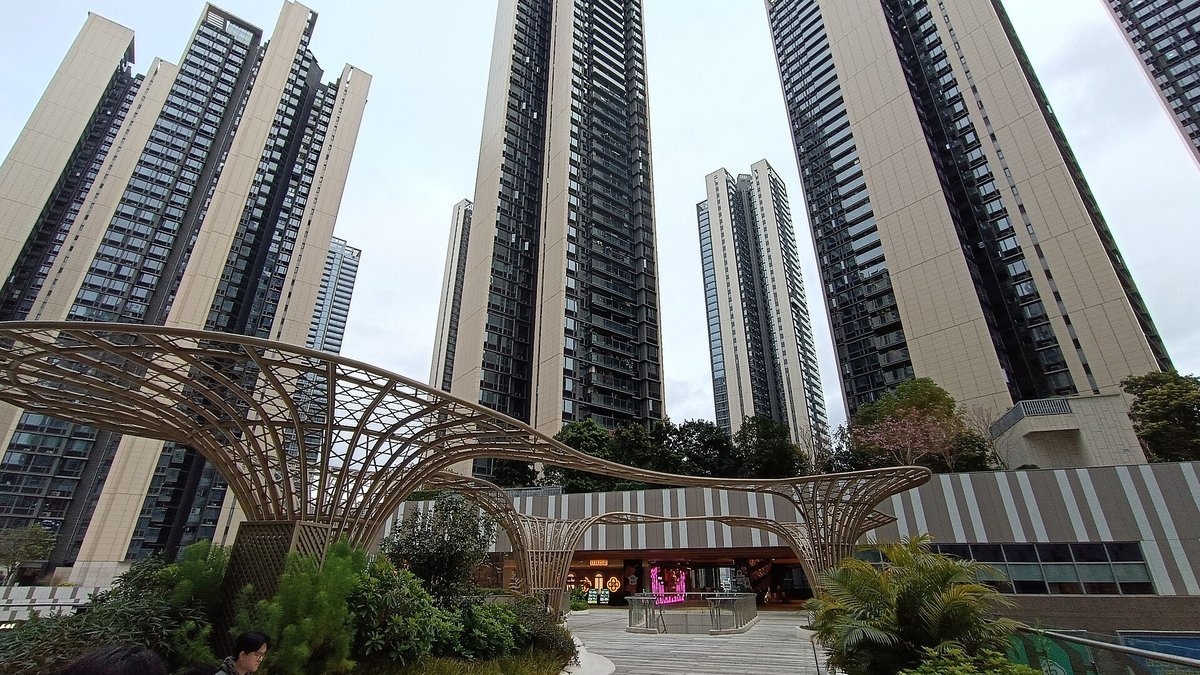
Shenzhen rents are much cheaper than Hong Kong, and with many Hong Kong residents heading to Shenzhen for a few days every week in recent years, renting a flat to store luggage, live in long-term, or use as a studio has become very common. But Shenzhen's rental market rules are different from Hong Kong's: deposit conventions, tenancy contracts, and how water and electricity are charged are all different. This article explains rent levels and what to watch out for when signing, district by district.
📌 Rents fluctuate with building age, renovation, floor, and supply. The figures in this article are reference ranges from publicly listed properties on various rental platforms in September 2026; the actual listings on the platform on the day prevail. This article provides general information only and does not constitute rental advice.
Step 1: Choose a district — 3 mainstream choices for Hong Kong residents
| Area | Advantages | Suited to |
|---|---|---|
| Futian | Close to Futian Checkpoint, densest metro, fastest back to Hong Kong | Hong Kong residents who commute back and forth often |
| Luohu | Close to Luohu Checkpoint, mature amenities, more affordable rent | Limited budget, like it lively |
| Nanshan | Nice new-district environment, close to Science Park and Shenzhen Bay, many malls | Working in Nanshan / want a better place to live |
2026 rent reference for 8 districts
| District | Metro station | Studio / 1-bed reference | 2-bed reference | Notes |
|---|---|---|---|---|
| Futian CBD (Shopping Park, Convention & Exhibition Center) | Shopping Park Station, Line 1/3 | ¥4,500–6,500 | ¥7,000–11,000 | Most expensive but most convenient, walk straight to the mall |
| Futian (Chegongmiao, Shangsha/Xiasha, Huanggang) | Chegongmiao Station, Line 1/11 | ¥3,500–5,500 | ¥6,000–9,000 | More older buildings, good value |
| Luohu (Guomao, Dongmen) | Guomao Station, Line 1 | ¥3,000–5,000 | ¥5,000–8,000 | Close to Luohu Checkpoint, back home as soon as you cross |
| Luohu (Liantang, Buji area) | Liantang Checkpoint Station, Line 2 | ¥1,500–3,000 | ¥3,000–5,000 | Cheapest tier, 20 to 30 minutes more commuting |
| Nanshan (Houhai, Coastal City) | Houhai Station, Line 2/11/13 | ¥4,000–7,000 | ¥7,000–12,000 | Many new buildings, nice environment, close to Shenzhen Bay |
| Nanshan (Science Park, Nanyou) | Hi-Tech Park Station, Line 1 | ¥3,500–6,000 | ¥6,000–9,500 | Studios in Science Park measured at about ¥3,500–6,000 |
| Longhua (Minzhi, Hongshan, Shenzhen North) | Hongshan Station, Line 4/6 | ¥2,500–4,000 | ¥4,500–7,000 | Studios in compounds about 20%–30% cheaper than Futian |
| Bao'an (Pingzhou, Xixiang) | Pingzhou Station, Line 1 | ¥2,000–2,500 | ¥3,500–5,500 | Cheapest urban village studios, about 30 minutes more commuting |
Simply put: for the same budget, move a few stops west along Metro Line 1 (Pingzhou, Xixiang) and rent can be 30–40% cheaper, at the cost of 30 extra minutes of commuting each day. If you don't need to return to Hong Kong or go to work in Futian every day, living in Longhua or Bao'an is clearly much better value.
Where to find listings: official platforms first
- Beike Zhaofang / Lianjia — the mainland's largest legitimate agency platform, listings carry a "verified property" mark, and transaction prices and rents have historical records you can check
- Anjuke — an aggregator platform, plenty of listings but mixed quality, you have to filter yourself
- Xiaohongshu / Facebook Hong Kong residents' groups — many Hong Kong residents list or sublet, but beware of fake listings and "sub-landlords"; always check the original property ownership certificate
- Walk straight into an estate agency — Shenzhen has an extremely high density of agencies; street shops are most numerous around Guomao in Luohu, Shangsha/Xiasha in Futian, and Houhai in Nanshan
4 things you must know before signing
- Deposit convention = "two months' deposit, one month's rent" — that is, pay two months' deposit plus one month's rent when signing. To move out you usually need to give one month's notice; leaving early may mean losing the deposit.
- Water and electricity are charged in two ways — proper compounds charge government rates (electricity about ¥0.6–0.7/kWh, plus tiered surcharges); many urban villages charge a "flat rate" of ¥1.2–1.5/kWh for electricity and ¥5–8/tonne for water, much more expensive, so you must ask clearly how it's calculated before signing.
- Who pays management fees and internet — the tenant usually pays the management fee (about ¥3–8/sq m/month); broadband is mostly separate, see our Shenzhen broadband and internet guide.
- Tenancy contracts can be registered — on the mainland you can register a tenancy contract online via the "Shenzhen Municipal Housing and Construction Bureau"; a registration record helps later when applying for a residence permit or opening a bank account.
8 tips to avoid pitfalls when signing
- Verify the landlord's identity: ask to see the original property ownership certificate and the landlord's Home Return Permit/ID card, and make sure the names match
- If the other party is a "sub-landlord", you must see their original lease with the landlord and confirm they have the right to sublet
- Before signing, read the water and electricity meters on the spot and photograph them for your records
- Write down the list of furniture and appliances and their condition, to avoid disputes when moving out
- State clearly in the lease that "Party A may not terminate early without cause" and the compensation arrangements for breach
- Pay the deposit and rent by bank transfer or real-name WeChat/Alipay transfer, keep records, and avoid cash
- Check whether perks like "no rent during renovation" are only verbal; they must be written into the contract
- Best to pick a property within 500 metres of the metro; rental turnover is higher and subletting later is easier
FAQ
What documents do Hong Kong residents need to rent in Shenzhen?
Mainly the Home Return Permit. Most landlords and legitimate agencies accept signing with a Home Return Permit; if you later want to apply for a residence permit, social insurance, or a bank account, pay attention to registering the tenancy contract.
Is renting in Shenzhen always two months' deposit, one month's rent?
It's the mainstream convention. Some long leases or landlords in a hurry will do one month's deposit, one month's rent, but it's not common; some also ask for two months' deposit and two months' rent (paid half-yearly), so clarify before signing.
Can I apply for a residence permit when renting in Shenzhen?
Yes. It generally requires a lawful and stable residence (registered lease) and continuous residence registration; for details see the Shenzhen residence permit application guide.
Does the rent include management fees, water and electricity?
Usually not. The lease generally states only "rent"; water, electricity, management fees, and broadband are paid separately by the tenant, so ask about each item clearly before signing and write it into the contract.
Can I rent for just one month?
Yes, but you'll pay a premium. Shenzhen has many "monthly rental apartments" (brands such as Ziroom, Boyu, etc.), rented by the month with less deposit pressure, but the unit price is 20–30% more expensive than a long lease.
Practical tips
- Best to view on a weekday daytime; check natural light, soundproofing, and water pressure on the floor
- Ask clearly whether there are any "outstanding arrears" (water, electricity, management fees) and have the landlord settle them before handover
- Shenzhen summers are hot, so test whether the air conditioning is cold enough; there's no heating in winter, so check whether there's a cooling/heating air conditioner
- Register the tenancy contract within the first week after signing; it makes everything easier afterwards
Must-do before moving in: accommodation registration and lease registration
There are two things Hong Kong residents renting must do, otherwise it will affect later applications for a residence permit and bank accounts:
- Temporary accommodation registration for overseas personnel: under the Exit and Entry Administration Law, Hong Kong, Macao, and Taiwan residents staying in accommodation other than hotels must report to the local police station within 24 hours of moving in; many districts in Shenzhen support online processing via the "Shenzhen Public Security" WeChat mini-program.
- Tenancy contract registration: can be done online via the Shenzhen Municipal Housing and Construction Bureau platform, free of charge; a registration record is very helpful for applying for a residence permit and opening a bank account.
Official reminder: beware of 3 types of rental traps
- Shady agencies: before signing, check whether the agency has a business licence and registration with the housing authority; don't use "unlicensed" agencies.
- Rent loans: rental companies may not induce you to take a "rent loan" under the guise of rent instalments, nor may they write loan terms into the tenancy contract.
- High-in, low-out / long-collect, short-pay: if the landlord collects monthly but the tenant must pay quarterly or annually, it may be a sign the company is about to "collapse and run", so try to negotiate shorter payment terms.
Rent level reference: the average rent for commercial housing in Shenzhen is about ¥73/sq m·month; Nanshan, Futian, and Luohu are the three most expensive districts in the city. The above information is subject to official announcements such as the Shenzhen Municipal Housing and Construction Bureau and the Futian District housing rental guide.
Note: before signing, remember to pay rent and deposit by bank transfer or real-name WeChat/Alipay transfer, keep records, and avoid cash. To rent cheaply, ask clearly whether it's "residential water and electricity" or "commercial water and electricity"; urban villages mostly use commercial electricity rates, and summer air-conditioning costs differ greatly.
— Compiled by the editorial team of HKSZ Life, the guide to living in Shenzhen. Rents are reference ranges, subject to the listings on the rental platform on the day and the lease terms (updated September 2026).
💬 Comments
Loading…