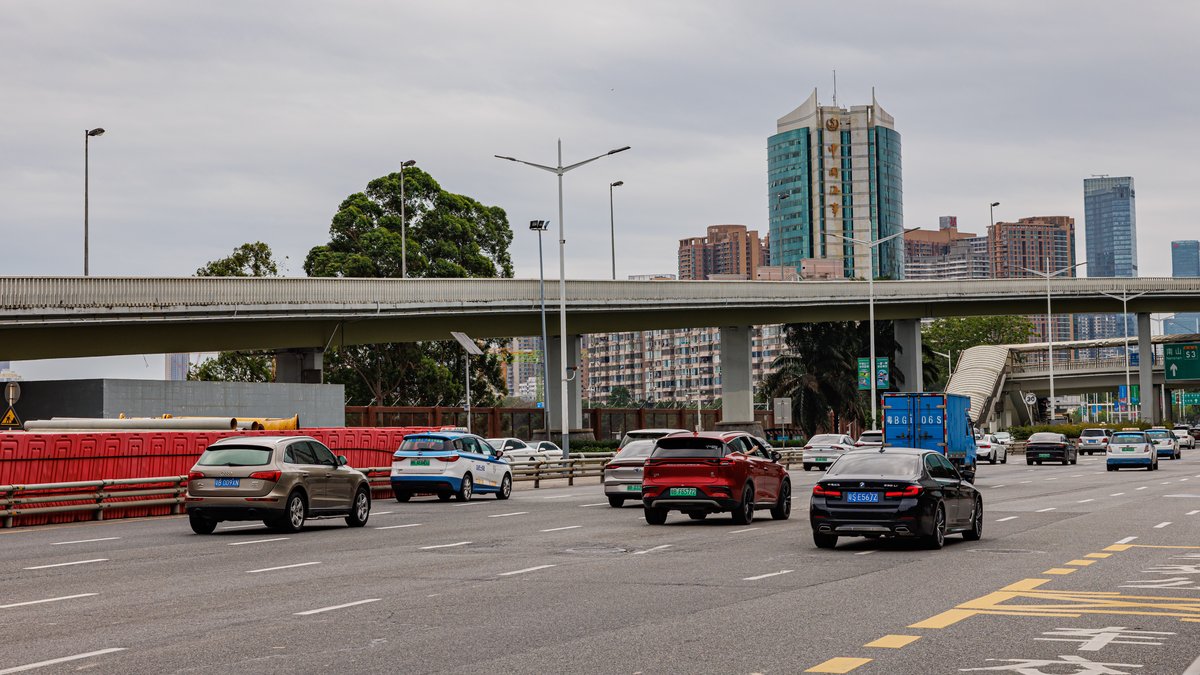
Robotaxis are no longer a novelty in Shenzhen. By 2026, Pony.ai, Apollo Go (Baidu) and OnTime (如祺出行) are charging real fares, and their service areas now reach Shenzhen Bao'an International Airport, Shenzhen Bay Port and Shekou Cruise Homeport. For Hong Kong visitors the first question is always the same: can I book one with my Home Return Permit? The answer depends on which app you use and which district you are standing in. This guide sets out who actually operates where, how to book, what you pay, and nine real pick-up points — each with its metro line, station and exit.
Shenzhen robotaxis in 2026: not a city-wide service, but several licensed zones
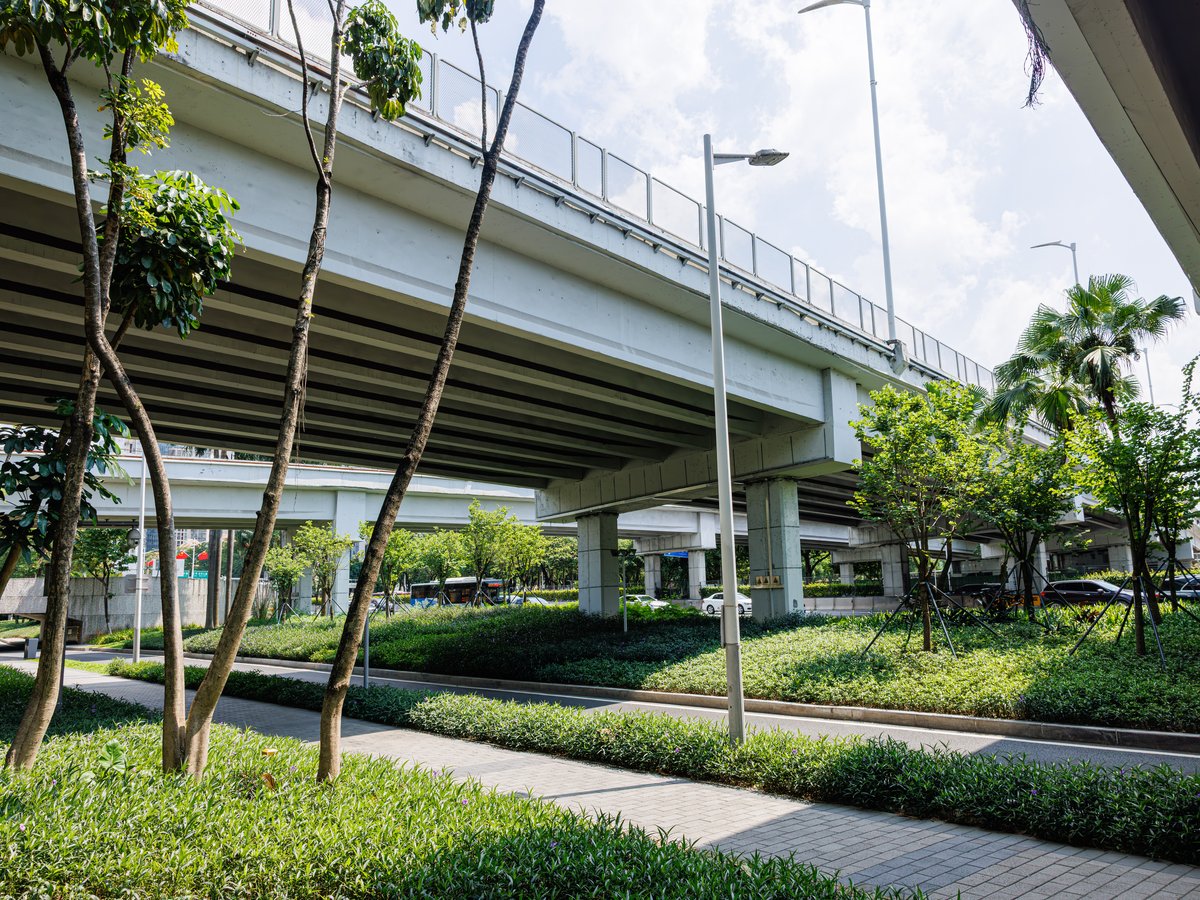
The legal starting point matters, because 2026 saw a widely shared misreading online. The Shenzhen Special Economic Zone Intelligent Connected Vehicle Regulations — China's first local rules dedicated to autonomous driving — took effect on 1 August 2022. A revised version took effect on 1 July 2026, and its Article 17 says the municipal government may, in selected districts or across the city, cautiously explore opening up road testing and demonstration applications, and explore commercial pilot operations.
Social media quickly recast that as "driverless taxis everywhere from 1 July". On 18 June 2026 the Shenzhen Intelligent Connected Transportation Association and several operators told local media that this is an over-reading: the clause is a legislative authorisation, not a switch. At the time, the city had not issued municipal commercial-pilot rules. Always treat the operators' own apps and official announcements as the current position.
Two official figures give the real scale:
- 4,018 km of test roads open and more than 1,800 autonomous vehicles in operation — Shenzhen Municipal Transport Bureau, Shenzhen Comprehensive Transport 15th Five-Year Plan (consultation draft), published 12 May 2026.
- By 2030: more than 10,000 autonomous vehicles in operation and over 6,000 km of open road — same document.
- Pingshan District leads at district level. In May 2026 Pingshan issued China's first district-level policy for city-wide opening of test, demonstration and commercial pilot operations, covering passenger, cargo and sanitation use.
- Regulator upgraded. The Shenzhen intelligent connected vehicle supervision platform 2.0 was announced in May 2026: official figures cite a 90% automatic validation rate for operator filings, approval within five days, warning accuracy above 95% and full incident reconstruction in about 15 minutes.
Which companies actually carry paying passengers?
Four names matter: Pony.ai, Apollo Go, OnTime and WeRide. DeepRoute and Momenta remain at testing or demonstration stage in Shenzhen.
| Operator | Where it runs in Shenzhen | How to book | Latest public figures |
|---|---|---|---|
| Pony.ai | Nanshan and Bao'an are the core zones; connected to Shenzhen Bao'an International Airport, Shenzhen Bay Port and Shekou Cruise Homeport | Pony.ai app (the App Store listing covers Beijing, Guangzhou, Shanghai and Shenzhen); an international app exists for overseas visitors | January 2024: first paid driverless commercial licence in a Chinese first-tier city centre (Bao'an). March 2025: first fully driverless market-operation permit in Nanshan. By December 2025 the Shenzhen operating area grew from 21.7 to 220 sq km with over 15,000 pick-up points |
| Apollo Go (Baidu) | Nanshan (demonstration service since 17 February 2022, early routes covering Shenzhen Bay MixC, Poly Cultural Plaza and Talent Park) and Pingshan | Apollo Go app or WeChat mini program | June 2023: approved for Pingshan's first fully driverless commercial pilot; maximum three passengers per vehicle |
| OnTime | Since January 2024: Qianhai, Nanshan Yuehai, Bao'an airport area, Shenzhen Bay and Shenzhen Bay Port; 2026 regular service covers Bao'an and Nanshan | OnTime app; also available through Alipay transport services (from July 2026) and the Tencent Travel WeChat mini program (from August 2026) | More than 550 robotaxis on the platform as of the 19 August 2026 interim results |
| WeRide | Luohu (an autonomous shuttle line, not a taxi) | Deep Bus Travel (深巴出行) WeChat mini program | 26 August 2025: launched B888, Shenzhen's first Level 4 autonomous bus line, with Shenzhen Bus Group |
Pony.ai: the easiest to hail, and the priciest
Pony.ai opened a Qianhai R&D centre in November 2021 and has collected a string of firsts since. Its Q2 2026 results, published on 18 August 2026, state that the Shenzhen network now stretches to Shenzhen Bao'an International Airport, Shenzhen Bay Port and Shekou Cruise Homeport, covering commuting, cross-border travel and airport transfers. The group fleet reached 1,975 robotaxis by 30 June 2026, targeting more than 3,500 by year-end.
On pricing, the company says fares are benchmarked against Didi Express and Premium tiers — so expect comfort and 24/7 availability rather than a bargain. Management said in a Q1 2026 interview that Shenzhen unit prices run about 10% above Guangzhou's.
Apollo Go: densest in Pingshan, but identity verification is the hurdle
Apollo Go was approved in June 2023 for Pingshan's first fully driverless commercial pilot and has long run a demonstration service in Nanshan. Its published passenger rules are strict: a maximum of three passengers, no pregnant women, no infants in arms, no passengers aged over 70, and no pets; drop-off can be changed twice at most. As of 2024 the service required a mainland mobile number and accepted only a second-generation mainland ID card for real-name verification — the single biggest obstacle for Hong Kong riders. Check the app's current registration page for 2026 rules.
OnTime: easiest to reach through apps you already have
OnTime, the GAC-backed mobility platform, runs mixed fleets of human-driven and driverless cars. It joined Alipay transport services on 27 July 2026 and the Tencent Travel WeChat mini program on 11 August 2026, so you do not necessarily need another app — the bookable area is whatever the channel shows.
WeRide: the free autonomous shuttle at Luohu Port
If you simply want to ride an autonomous vehicle without wrestling with real-name registration, the B888 line at Luohu is the lowest-friction option. Launched on 26 August 2025, it runs between Luohu Port and MixC Food Market (萬象食家) via Guomao, Diwang Tower, the Grand Theatre and MixC — about 5.7 km and 4.6 km in each direction, 25 to 30 minutes, free with a booking through the Deep Bus Travel mini program. It is a bus line, not a taxi, but it is fully autonomous.
How to book: three routes for Hong Kong riders
Route 1: the Pony.ai app
- Download "Pony.ai" or "PonyPilot+" from your app store. Pony.ai states that service covers Beijing, Guangzhou, Shanghai and Shenzhen; an international version is available for overseas visitors, subject to what the registration page accepts.
- Register with a phone number, then check the in-app map: only the service area shown is bookable.
- Choose your origin and destination from the listed pick-up and drop-off points — these are fixed stops such as metro stations, malls, ports and transport hubs, not arbitrary kerbsides.
- Verify with the last four digits of your phone number to unlock the doors, then confirm the trip on the rear screen.
- Payment is settled in the app; WeChat Pay HK, AlipayHK or a mainland wallet all work in practice.
Route 2: Apollo Go app or WeChat mini program
Search for Apollo Go (蘿蔔快跑) in WeChat or download the app, then pick your stops and check the estimate. The critical gate is real-name verification: as of 2024 a mainland second-generation ID card was required, which meant Hong Kong visitors had to ask a mainland friend to book. Confirm the 2026 requirement inside the app.
Route 3: OnTime via Alipay or Tencent Travel
Open Alipay's transport services or WeChat's Tencent Travel mini program, search for OnTime robotaxi, and book inside the service zone. This suits anyone who has already set up AlipayHK or a mainland Alipay account.
What does it cost?
There is no city-wide robotaxi tariff. Each operator prices independently and issues its own discounts. Figures that can be traced to a source:
- Pony.ai official, Shenzhen, February 2026: net revenue of CNY 338 per vehicle per day across 23 trips. That works out at roughly CNY 14.7 net per trip — short hops dominate.
- Pony.ai pricing stance: fares are benchmarked against Didi Express and Premium, and typically stay above entry-level ride-hailing even after discounts.
- Apollo Go, media testing outside Shenzhen: in July 2026 reporters in Wuhan completed six of 24 attempted bookings at CNY 1.60–1.98 per km after discounts, against CNY 4.60–6.70 per km at list price. An earlier Guangzhou test paid CNY 4.14 for 5.8 km against a list fare of CNY 16 base plus CNY 18.56 distance minus CNY 30.42 in promotions. These are media tests, not Shenzhen pricing.
- WeRide B888: free, booked through the mini program.
Practical takeaway: city-centre trips of 3–6 km usually land between CNY 10 and CNY 25 after discounts — comparable to, or slightly above, Didi Express. Airport and port runs of 10 km or more need an in-app estimate first. The app quote at the moment of booking is the fare.
Nine real pick-up points (with metro line, station and exit)
Robotaxis only stop at designated points. Every location below is a real, publicly documented place, with the nearest metro exit and a fare indicator for typical trips.
Luohu District: Luohu Port (free autonomous shuttle)
Location: Luohu Port transport building, Renmin South Road, Luohu District. Metro: Line 1, Luohu station, exits A2/A3 (A2 leads to Luohu Commercial City, Luohu Port and the customs building). Fare: the B888 autonomous shuttle is free via the Deep Bus Travel (深巴出行) WeChat mini program, 25–30 minutes end to end.
Futian District: Convention and Exhibition Center area (test and demonstration zone)
Location: Fuhua Road at Zhongxin 5th Road, Futian District (Shenzhen Convention and Exhibition Center). Metro: Lines 1 and 4, Convention and Exhibition Center station, exit D (for the exhibition centre and Galaxy). Status: Futian has hosted an L4 robotaxi demonstration by DeepRoute since 2023, and in July 2026 Momenta announced a Shenzhen intelligent connected vehicle road-test permit for L4 robotaxi testing. That means testing and demonstration, not a regular paid service — check the app map before travelling specifically for a robotaxi.
Nanshan / Shenzhen Bay: Houhai and Coastal City
Location: Coastal City mall, Wenxin 5th Road, Nanshan District. Metro: Lines 2, 11 and 13, Houhai station, exit D1 — take the escalator up to the elevated walkway straight into Coastal City. Fare: Houhai to Shenzhen Bay Port is 4–5 km, roughly CNY 12–20 after discounts.
Nanshan: Shenzhen Bay MixC
Location: 2888 Keyuan South Road, Nanshan District. Metro: Houhai station, exit G. Fare: CNY 10–25 for city-centre hops. Pony.ai's official Chinese New Year 2026 operating data listed Shenzhen Bay MixC among its busiest pick-up points, alongside Window of the World, Nantou Ancient City and Shenzhen Bay Port.
Nanshan: Window of the World
Location: 9037 Shennan Boulevard, OCT, Nanshan District. Metro: Lines 1 and 2, Window of the World station, exit K (the Window of the World plaza). Fare: Window of the World to Shenzhen Bay Port is about 10 km, roughly CNY 25–40.
Nanshan: Shekou Cruise Homeport
Location: 1 Haiyun Road, Nanshan District, just north of Shekou Cruise Centre. Metro: Line 12, Taizi Bay station, exit A — about five minutes' walk from gate 6 of the homeport; a B601 shuttle from level B1 also links to Shekou Port station (Line 2), exit C. Fare: Shekou to Shenzhen Bay Port is 6–7 km, roughly CNY 18–28. Pony.ai confirmed in its Q2 2026 results that Shekou Cruise Homeport is now connected.
Nanshan: Shenzhen Bay Port (the most useful for Hong Kong riders)
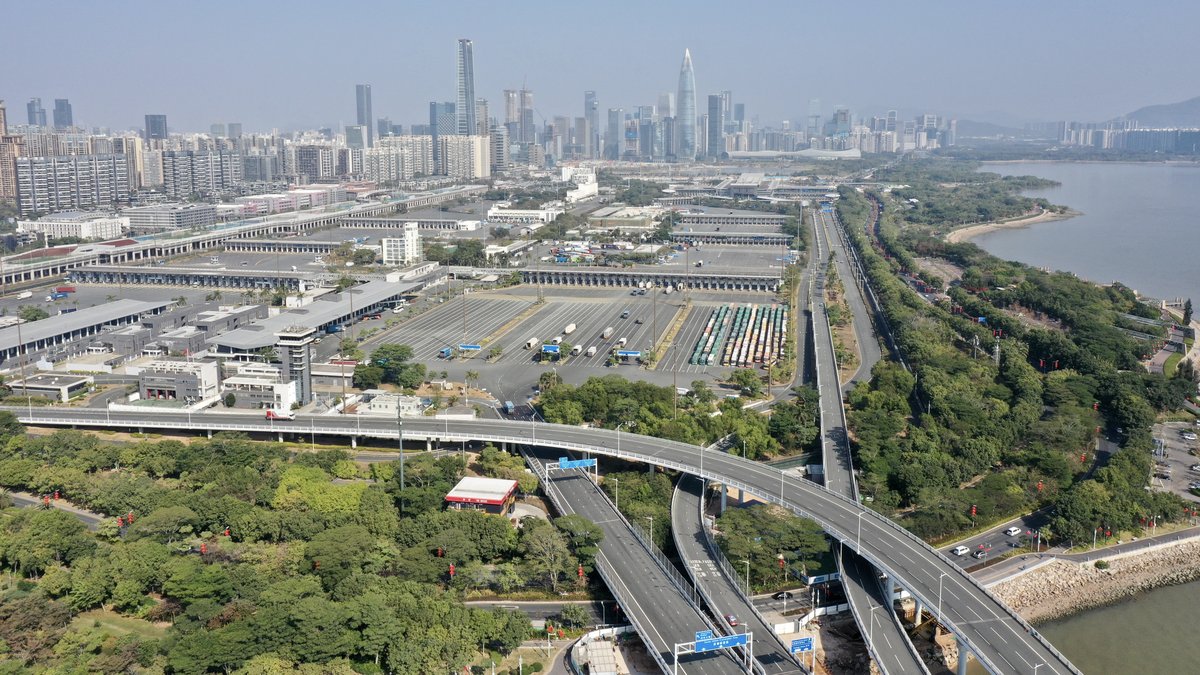
Location: Shenzhen Bay Port transport hub, Shekou, Nanshan District. Metro: Line 13, Shenzhen Bay Port station — the southern terminus, opened 28 December 2024 — exits B and C lead to the passenger terminal. Fare: the port to Houhai or Coastal City is 4–5 km, roughly CNY 12–20; the port to Bao'an airport is about 25 km, roughly CNY 60–90. Both Pony.ai and OnTime list the port as a service point.
Bao'an District: Shenzhen Bao'an International Airport Terminal 3
Location: 18 Linghang 1st Road, Hangcheng, Bao'an District (Ground Transportation Centre). Metro: Line 11, Airport station, exits B and C (for the Ground Transportation Centre and the airport bus terminal). Fare: airport to Qianhai or Nanshan is 20–25 km, roughly CNY 50–80. OnTime has run a demonstration service in the airport area since 2024, and Pony.ai connected the airport hub during 2026.
Pingshan District: Pingshan Centre (densest Apollo Go zone)
Location: Pingshan central district, near the Pingshan district government and Pingshan Central Park. Metro: Line 14, Pingshan Centre station, exit A (four exits; A and C have lifts). Fare: CNY 8–18 for local hops. Apollo Go was approved for Pingshan's first fully driverless commercial pilot in June 2023, and Pingshan issued China's first district-level city-wide opening policy in May 2026.
Safety: seven things to know before you ride
- 1. Liability follows the system (from 1 July 2026): the revised rules split responsibility by whether the automated driving system is engaged — if it is not, the driver is liable; if it is, the vehicle owner or manager is liable.
- 2. Vehicles and operators are supervised. Vehicles need temporary plates, operators pass multi-department review, and running data feeds the Shenzhen supervision platform in real time.
- 3. Fully driverless and safety-driver cars both exist. Apollo Go started in Shenzhen with a safety driver on board, while Pony.ai won a fully driverless market-operation permit in Nanshan in 2025. Check the vehicle type when booking.
- 4. Seating is regulated. Front seats are not for passengers; Apollo Go allows a maximum of three riders and excludes pregnant women, infants in arms, riders over 70 and pets.
- 5. Do not book one when you are in a hurry. A 2024 Hong Kong media test of Apollo Go took 26 minutes for 5.1 km and waited about 90 minutes for the car. Driving is conservative and speeds are low.
- 6. Occasional failures happen. On 31 March 2026 multiple Apollo Go vehicles stalled in Wuhan and passengers were briefly stranded, according to media reports; the company's customer service attributed it to a network and cloud communication fault. Keep the in-app support channel handy.
- 7. Expect cameras and trip data. Cabins are recorded for regulatory purposes; luggage space is limited to the rear, so take a normal ride-hailing car if you are carrying large bags.
Practical tips
- Start at the right port: Shenzhen Bay Port (Line 13) and Luohu Port are the two most useful 2026 entry points — one has robotaxis, the other has the free B888 shuttle.
- Check the map before you travel: open the app ten minutes before you arrive; no service zone means no dispatch.
- Treat it like a shuttle, not a taxi: stops are fixed, so plan a short walk from a metro exit or mall.
- Avoid peak hours: evening peaks and mall closing times mean long waits. Conversely, during Chinese New Year Pony.ai kept running at normal prices while demand peaked.
- One phone, one car: larger groups need separate bookings.
- Set up payment first: link WeChat Pay HK or AlipayHK before you travel, not at the kerb.
FAQ
Can Hong Kong residents book a Shenzhen robotaxi with a Home Return Permit?
It depends on the platform. Apollo Go's position as of 2024 was that only a second-generation mainland ID card was accepted for real-name verification, so Hong Kong visitors needed a mainland friend to book. Pony.ai's mainland app generally expects a mainland mobile number, but an international app exists for overseas visitors. Policies can change, so check the registration page and treat operator announcements as current. The safest setup is a mainland mobile number plus a mainland ID or residence permit.
Is a robotaxi cheaper than Didi?
Not necessarily. Pony.ai explicitly benchmarks against Didi Express and Premium, and Shenzhen unit prices run about 10% above Guangzhou. Apollo Go's media-tested per-kilometre rates outside Shenzhen sit close to ordinary ride-hailing. City trips land around CNY 10–25 after discounts — cheap during promotions, but not a budget replacement.
Can I ride a driverless taxi anywhere in Shenzhen since 1 July 2026?
No. The revised regulation only authorises the city to explore city-wide road testing and demonstration cautiously; the Shenzhen Intelligent Connected Transportation Association publicly clarified in June 2026 that "driverless taxis city-wide" was a misreading. Pingshan is the district moving fastest. Always check the in-app map for the bookable area.
Which port is easiest for a robotaxi?
Shenzhen Bay Port: exit B or C of Line 13's Shenzhen Bay Port station and you are at a listed service point for Pony.ai and OnTime. Luohu Port has the free B888 shuttle to MixC Food Market. Futian and Huanggang checkpoints are not part of regular paid service areas, so do not assume you can hail there.
Is it safe at night alone?
Robotaxis have remote monitoring and in-app support, and cabins are recorded; Pony.ai advertises 24/7 operation. Even so, choose drop-off points at lit, busy places such as malls or ports rather than quiet side streets, and keep a screenshot of your trip record.
Sources
- Revision to the Shenzhen Special Economic Zone Intelligent Connected Vehicle Regulations, in force 1 July 2026, and Shenzhen People's Congress Standing Committee voting records.
- Shenzhen Municipal Transport Bureau, Shenzhen Comprehensive Transport 15th Five-Year Plan (consultation draft), 12 May 2026.
- Shenzhen Intelligent Connected Transportation Association and Shenzhen Autonomous Driving Safety Laboratory, official response relayed by Shenzhen media, 18 June 2026.
- Longgang District Government, Measures for Functional Unmanned Vehicle Road Testing and Application Pilots (Trial), 6 July 2026.
- Pony.ai Q1 and Q2 2026 results, corporate website and App Store listing.
- OnTime 2026 interim results and newsroom, 19 August 2026.
- WeRide press release on the B888 autonomous bus line in Shenzhen, 26 August 2025.
- Southern Metropolis Daily, From 1,800 to 10,000: how autonomous vehicles are reshaping Shenzhen life, 3 June 2026.
- Shenzhen Metro official station exit information (Luohu, Airport) and station articles for Shenzhen Bay Port, Window of the World, Convention and Exhibition Center, Taizi Bay and Pingshan Centre.
- Hong Kong media ride-along test of Apollo Go in Shenzhen (2024) and 2026 reporting on Apollo Go fares.
Related articles
- Using Didi & Taxis in Shenzhen with Zero Chinese
- Shenzhen Metro Made Easy: Lines, Fares & How to Pay as a Tourist
- Essential Apps for Shenzhen: Translation, Maps, Transport & Food (English-Friendly)
💬 Comments
Loading…